


Discover pre-construction planning services: master budgeting, scheduling, risk mitigation, and collaboration for project success.
What Are Pre-Construction Planning Services (And Why They Matter)

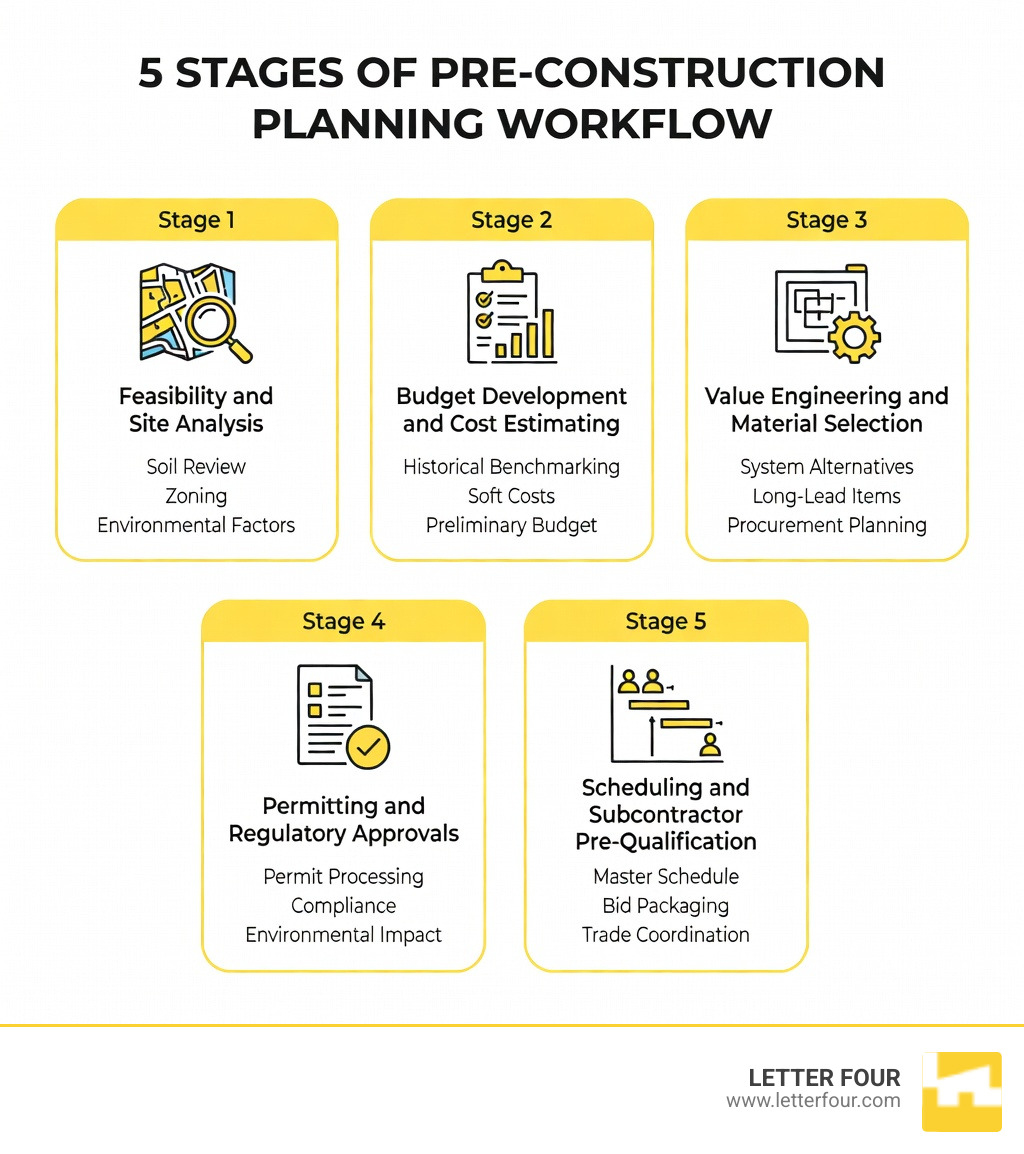
Pre-construction planning services are a structured set of activities completed before any physical construction begins - covering everything from site analysis and budgeting to permits, scheduling, and value engineering.
Here's a quick overview of what they include:
- Feasibility and site analysis - assessing whether your project is buildable and viable
- Budget development - creating realistic cost estimates before you commit
- Value engineering - finding smarter, cheaper ways to achieve the same result
- Permitting and approvals - securing the right documents before construction starts
- Scheduling - mapping out milestones, sequencing, and procurement timelines
- Subcontractor pre-qualification - vetting trade partners early for better pricing and reliability
Most construction problems - blown budgets, surprise costs, design-to-build mismatches - don't start on the job site. They start before the first shovel hits the ground.
Pre-construction planning services are where those problems get solved. It's the phase where your project stops being an idea and starts becoming a plan with real numbers, real timelines, and real accountability.
Without it, you're essentially guessing. And in construction, guessing is expensive.
Pre-construction planning services are typically offered as a separate agreement from your main construction contract, often starting at $1,000+ per month depending on scope. But the cost savings and avoided delays they generate almost always far outweigh the upfront investment.
The sections below break down every component of the pre-construction process - so you know exactly what to expect, what to ask for, and how to use it to protect your budget and your project.
The Strategic Value of Pre-Construction Planning Services
When we talk about the strategic value of pre-construction planning services, we are talking about moving away from the "hope for the best" method of building. In a traditional setting, an owner might hire an architect, get a beautiful set of drawings, and then hand them to a contractor only to find out the project costs twice the original budget. This is the primary risk of the Design-Bid-Build model.
By contrast, modern pre-construction is a collaborative, data-driven process. It allows us to define project parameters and scope with surgical precision. According to The Digital Builder's Guide to Preconstruction Collaboration, this phase is a major cost-saving opportunity because it allows the construction project to flow smoothly through to the post-construction phase. We use this time to conduct a preliminary evaluation of the project, ensuring that your objectives as a client are aligned with the physical and financial realities of the site.
Defining the Pre-Construction Phase
The pre-construction phase is the bridge between a dream and a job site. It starts with initial meetings where we listen to your vision and establish your "must-haves" versus your "nice-to-haves." During this time, we develop a schematic design that tests the project's viability.
As a Design-Build firm, we believe this phase is the most critical for success. It's where we integrate architectural creativity with the hard truths of construction costs. Instead of waiting for a bid to come back too high, we provide continuous estimating, ensuring that the design never outpaces the budget.
Site Analysis and Regulatory Compliance
In California, and specifically within Los Angeles and LA County, the ground beneath your feet matters just as much as the structure on top of it. A major component of pre-construction planning services is a thorough site analysis. This includes:
- Soil Review: Understanding the geological conditions to determine foundation requirements.
- Infrastructure Assessment: Checking for existing utility capacities (water, power, sewer) to see if upgrades are needed.
- Zoning and Land Use: Navigating the dense web of Los Angeles zoning ordinances to ensure your project is actually allowed on that specific lot.
- Environmental Impact: Assessing any local environmental constraints that could halt production.
We also assist with the complex world of permits and approvals. In some cases, we can leverage Pre-Approved Plans - LA County Recovers for specific rebuild scenarios, which can significantly shave time off the regulatory clock. Handling these items during pre-construction prevents the nightmare scenario of stopping work halfway through because of a missing permit or an unforeseen zoning hurdle.
Financial Control and Value Engineering
One of the biggest fears in construction is the "budget creep." We combat this by using a method called Target Value Design. Unlike traditional bidding where you design first and price later, we establish the budget upfront and design to that number.
| Feature | Traditional Design-Bid-Build | Target Value Design (Pre-Con) |
|---|---|---|
| Budgeting | Estimated after design is complete | Established at the very beginning |
| Cost Control | Reactive (cutting items later) | Proactive (designing within limits) |
| Transparency | Low (bids can vary wildly) | High (open-book cost analysis) |
| Speed | Slower (potential for redesigns) | Faster (seamless transition to build) |
We develop a Commercial Action Plan that accounts for every penny, including "soft costs" like architectural fees, permits, and insurance, which are often overlooked by less experienced teams. We use historical benchmarking—comparing your project to similar ones we've built in LA County—to ensure our pricing is accurate and transparent.
Maximizing ROI through Value Engineering
Value engineering is not about "cheapening" your project; it's about maximizing your Return on Investment (ROI). It is a systematic evaluation of material selection and system alternatives. For example, if a specific structural steel layout is driving up costs, we might suggest an alternative framing method that achieves the same open-concept look for 20% less.
Through our Essential Project Action Plan Deliverables, we analyze life-cycle costing. This means we look at the long-term cost of materials, not just the initial purchase price. Choosing a slightly more expensive, energy-efficient HVAC system during pre-construction can save you tens of thousands in operating costs over the building's life.
Procurement and Material Selection Strategies
In today's market, supply chain logistics are a major factor in project success. We use the pre-construction phase to identify "long-lead items"—things like custom windows, specialized electrical panels, or high-end appliances that might take six months to arrive.
By using a Project Planning Pack, we can pre-order these materials so they arrive exactly when the crew is ready for them. This level of inventory management eliminates the "standing around" time that plagues so many construction sites.

Scheduling, Constructability, and Risk Mitigation
A project without a schedule is just a hobby. During pre-construction, we build the entire project "on paper" first. We create a master schedule that includes every milestone, from the first permit application to the final walkthrough.
Using our Clear 4-Step Process, we employ the Critical Path Method (CPM). This identifies the specific tasks that, if delayed, will push back the entire project completion date. By identifying these early, we can create phasing strategies and logistics plans that keep the project moving even if one small part hits a snag.
Ensuring Constructability and Reducing Risk
Constructability is the measure of how easy (and safe) it is to actually build what is on the blueprints. During our pre-construction planning services, our in-house construction team reviews the architect's drawings to spot potential "unbuildable" details.
We look for:
- Obstacle Identification: Are there power lines or narrow Los Angeles alleys that will prevent a crane from reaching the site?
- Technical Expertise: Do the structural drawings match the mechanical and plumbing layouts? (Avoiding the "pipe through a beam" disaster).
- Safety Plans: Developing site-specific safety protocols before any workers arrive.
By understanding the risks of a Design-Bid-Build process, where the builder isn't involved in the design, you can see why having us review these details early is a massive risk-mitigation tool.
Benefits of Early Subcontractor Involvement
We don't just guess what a plumber or electrician will charge; we involve our trusted trade partners early. This allows for:
- Bid Packaging: Breaking the project into logical pieces for more accurate pricing.
- Pricing Leveling: Comparing multiple quotes for the same scope to ensure you are getting the best market value.
- Labor Availability: Securing the best crews in Los Angeles before they get booked up by other projects.
Learning how consultants shape your home building success is often about understanding that the "team" is much larger than just the architect and the contractor—it's a network of experts all working in sync.
Collaboration and Deliverables in Pre-Construction Planning Services
The secret sauce of successful construction is continuity. When the people who planned the project are the same people who build it, nothing gets lost in translation. This owner-architect-contractor synergy is the heart of what we do. We establish clear communication protocols and often act as the Owner's Representative, ensuring your interests are protected at every turn.
Key Deliverables of Pre-Construction Planning Services
When you finish the pre-construction phase with us, you aren't just left with a "good feeling." You receive a tangible set of Complete Project Action Plan Deliverables. These typically include:
- Responsibility Matrix: A clear chart showing who is responsible for what (Owner vs. Contractor vs. Architect).
- Detailed Cost Estimates: An open-book look at every anticipated expense.
- Master Schedule: A timeline with hard dates for milestones.
- Commissioning Plans: A roadmap for testing building systems (HVAC, electrical, smart home tech) to ensure they work as intended before you move in.
- Final Construction Proposal: A comprehensive document that transitions the project from "planning" to "building."
Collaborative Workflows in Pre-Construction Planning Services
We utilize Virtual Design and Construction (VDC) technology, creating 3D models that allow you to "walk through" your building before a single nail is driven. This helps with stakeholder alignment - making sure everyone from the building owner to the interior designer is on the same page. Knowing what to expect when consulting an architect is much easier when you can see the project in a digital space first. This real-time data allows for instant conflict resolution, such as moving a wall in the digital model rather than tearing it down on the job site.
Frequently Asked Questions about Pre-Construction
When should I engage pre-construction services?
As early as possible! Ideally, you should engage pre-construction planning services during the feasibility stage or the very beginning of the design phase. If you already have land or a building you want to renovate in Los Angeles, that is the time to start. Early involvement allows us to guide the design so it stays within your budget from day one.
How much do pre-construction planning services typically cost?
While every project is unique, these services are usually handled as a separate agreement from the actual build contract. In the industry, this often starts at $1,000+ per month depending on the complexity and scope of the project. Think of it as an insurance policy for your budget; the small monthly fee prevents the multi-thousand-dollar surprises that happen without proper planning.
How does pre-construction help control the final budget?
It eliminates the "redesign cycle." In traditional projects, you design something, get a bid, realize it's too expensive, and then pay the architect again to redesign it. Pre-construction uses continuous estimating and Target Value Design to ensure the design and budget grow together. No surprises, no excuses.
Conclusion
At LETTER FOUR, we've seen how pre-construction planning services transform the building experience from a stressful ordeal into a streamlined success. By bridging the gap between design and construction, we provide our clients in Los Angeles and LA County with true all-in budgets from the start and the peace of mind that comes from expert, in-house planning.
We don't believe in low-ball estimates that lead to costly change orders later. We believe in building smart, building fast, and building right. If you're ready to stop guessing and start planning, our Action Plans are the perfect place to begin your journey.



.svg)
















.avif)