

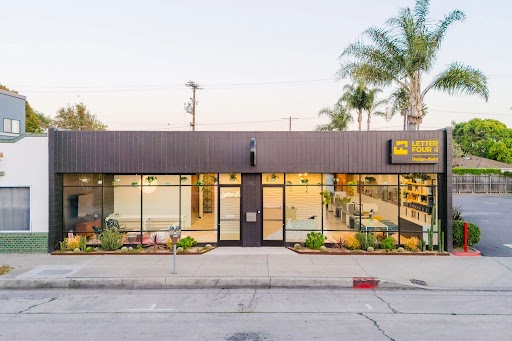
Culver City is one of LA's most competitive commercial markets. Major studios, restaurants, office tenants, and retail are all building here. Here is how to evaluate a commercial contractor before you sign anything.
If you are opening a restaurant in downtown Culver City, building out a studio space near Hayden Tract, or remodeling a retail storefront on Washington or Sepulveda, the contractor you pick will shape your timeline, your budget, and your relationship with the building department for the next twelve to twenty-four months. The wrong fit can quietly add six figures and six months to a project. The right one becomes a partner who protects your business while the build happens around it.
Culver City is a small geography with an outsized commercial pipeline. The neighborhood sits at the intersection of entertainment, tech, and food. That means commercial contractors here see a wider mix of project types than in most LA submarkets. That variety is useful when you are vetting firms, because it lets you ask sharper questions about who has actually built something like what you are planning.
This guide walks through the criteria that matter most when hiring a commercial contractor in Culver City, the questions worth asking on a first call, and what to look for in a firm's track record. It is written for business owners, developers, and tenants who are looking for a contractor they can trust will bring their vision to life.
What makes commercial construction in Culver City different?
Culver City is its own municipality with its own building department, planning department, and approval process. It does not run on LA County or City of Los Angeles timelines, even though it sits inside greater LA. A contractor who works mostly in the City of LA or in Santa Monica will be slower on a Culver City permit than one who pulls permits there regularly. Ask any firm you are interviewing how many active projects they currently have in Culver City and who their contact is at the building department.
The other quiet variable is the building stock. A lot of Culver City's commercial inventory is older, which means: converted warehouses, mid-century retail, and post-war offices. Tenant improvements in these buildings often surface seismic, ADA, or Title 24 upgrades that were not on the original scope. A commercial contractor who has worked in this kind of inventory will flag those triggers in the bid, not after demo. That distinction is the difference between a budget that holds and a budget that drifts.
Should you hire a design-build firm or a separate architect and contractor?
On commercial projects, the design-build model removes a layer of friction that costs most owners weeks and tens of thousands of dollars on the standard architect-plus-contractor track. Under one contract, design intent and construction reality stay aligned from day one. Pricing happens during design, not after, which means the scope you approve is the scope that gets built. Change orders drop. Owner communication runs through one point of accountability instead of two.
The separate-track model is not wrong – it has its place, particularly on large ground-up projects where competitive bidding is a strategic lever. But for tenant improvements, restaurant buildouts, retail spaces, and most office work in Culver City, design-build is faster and tighter. The trade-off is that you are betting on one firm rather than two, which is why the vetting in the next section matters.
How do you vet a commercial contractor in Culver City before signing?
Start with three documents the firm should be able to share on request: a current CSLB license verification, current general liability and workers' compensation certificates, and a project list with addresses and references from the last twenty-four months. If any of those three creates friction, that is the answer.
From there, focus the conversation on the work that looks like yours. A contractor with twenty years of multifamily experience is not necessarily the right hire for a 4,000-square-foot restaurant buildout. Ask for three references where the project type, square footage, and budget tier line up with what you are planning. Call them. The most useful question on a reference call is not whether the project went well. It is what surprised them, and how the contractor handled it.
Letter Four has worked in Culver City and across greater LA since 2010. Co-founders Lauren Adams (Architect, CA #C30146) and Jeremy Baker (Builder, CA #B1028949) leads every project the firm takes on.The firm was named one of the 14 Best Commercial Contractors in Culver City by General Contractors Magazine, a credibility marker that is one input among the ones listed above, not a substitute for them.
What does a good commercial contractor bid actually look like?
A good bid is specific, not generic. It names allowances where they exist and explains why. It separates hard costs from soft costs. It shows the contingency line as a real number, not buried in markup. It identifies long-lead items and how the schedule is built around them. And it is anchored to a drawing set or scope document that both parties can point to during construction when something is in question.
A bid that lands lowest is not always the bid that finishes lowest. Look for bids where the contractor has clearly read the drawings, asked questions during the bid window, and surfaced issues that other bidders may have missed. Those are the firms that have already started doing the work of building your project, before they win it.
How does Letter Four approach commercial projects in Culver City?
Letter Four is a design-build firm that has architecture, interior design, and construction operating under one roof. Lauren leads the architecture and design side; Jeremy runs construction. Every commercial project, whether tenant improvement or ground-up, starts with an integrated team rather than a handoff between disciplines.
The firm has delivered retail spaces and creative office projects across the Westside since 2010.
Planning a commercial project in Culver City? Schedule a consultation with Letter Four to talk through scope, budget, and timing.
Frequently Asked Questions
How much does a commercial contractor in Culver City cost?
Commercial construction costs are roughly between $350 to $700 per square foot for tenant improvements (These figures reflect construction hard costs only and assume a typical vanilla or white-box shell delivery. Projects starting from a cold or gray shell will require an additional $60–$130 per square foot before any tenant-specific work begins, and soft costs — including architecture, engineering, permitting, and city fees — add another 20–30% on top of construction in Los Angeles.), depending on the type of project/business (cafes, restaurants, office space, retail, wellness, gyms, etc.), finishes, MEP scope, and whether structural or seismic work is triggered. Restaurant buildouts run higher because of kitchen exhaust, grease interceptor, and Title 24 energy requirements. The most reliable way to get a real number is to share a programmatic scope with a design-build commercial contractor early and ask for a budget range before drawings are complete.
How long does a commercial tenant improvement take in Culver City?
A typical Culver City tenant improvement runs four to eight months from design start to certificate of occupancy, depending on scope and how the building department prioritizes the permit. Restaurant projects tend to run longer because of mechanical, plumbing, and health department coordination. Plan-check in Culver City has been faster than the City of LA in recent years for straightforward tenant improvements, but corrections cycles still drive most of the schedule risk. A commercial contractor with a current relationship at the building department will compress that timeline meaningfully.
Do I need an architect to hire a commercial contractor in Culver City?
Most commercial work in Culver City requires stamped architectural drawings to permit, which means an architect is involved one way or another. The question is whether you hire them separately or under a single design-build contract. A design-build commercial contractor brings the architecture in-house, which removes the coordination gap between design and construction and keeps pricing accurate from the first sketch. For owners who want one point of accountability instead of two, design-build is usually the more efficient path.
What is the difference between a general contractor and a design-build firm?
A general contractor builds from drawings produced by someone else, usually an architect the owner has hired separately. A design-build firm produces the drawings and builds from them under one contract. The practical difference is that design-build keeps design intent and construction reality in conversation from the first meeting, which means scope creep, value engineering, and change orders happen earlier and less frequently. For commercial projects in Culver City, where building department coordination and tight tenant timelines matter, the integrated model tends to deliver more predictable outcomes.
What licenses should a commercial contractor in Culver City have?
At minimum, a Class B general building contractor license issued by the California Contractors State License Board (CSLB), in good standing, with no outstanding complaints. For commercial work involving design integration, also look for licensed architects on the team. California architect licenses begin with #C and can be verified through the California Architects Board. Letter Four holds CSLB B #B1028949 and Architecture license #C30146. Always verify any contractor's license status directly through the CSLB website before signing a contract.
Does Letter Four work outside of Culver City?
Yes. Letter Four is based at 12822 Washington Blvd. in Culver City and works across the Westside, greater Los Angeles, and the broader LA County market. Recent commercial and residential projects span Pacific Palisades, Altadena, Santa Monica, Venice, Mid-City, and the South Bay.
Hiring a commercial contractor is a relationship decision, not a transaction. If you are evaluating firms for a Culver City project, schedule a consultation. We will tell you whether we are the right fit.
Sources & References
General Contractors Magazine, "The 14 Best Commercial Contractors in Culver City, California," last updated May 2024. https://www.generalcontractors.org/the-14-best-commercial-contractors-in-culver-city-california/
California Contractors State License Board (CSLB) – license verification: https://www.cslb.ca.gov/
California Architects Board – license verification: https://www.cab.ca.gov/


.svg)

















.avif)