


In this article we’ll dive into how the latest update to the Citywide Adaptive Reuse Ordinance is transforming empty office buildings into thousands of new homes and what it means for developers. We’ll look at how the City has streamlined the approval process and allowed for many more buildings to qualify, as well as why Letter Four’s Design-Build services are the best way to create new housing through adaptive reuse.
Picture this: Across Los Angeles, hundreds of buildings sit half-empty. Multi-floor office buildings where keyboards once clattered and strip malls where foot traffic has slowed to a trickle. These spaces could now be a solution to the housing crisis in Los Angeles. For those working in design-build who have always seen adaptive reuse as part craft, part resurrection, this is one of the most significant policy shifts.
How Did LA's Original 1999 Adaptive Reuse Ordinance Transform Downtown?
The original 1999 Adaptive Reuse Ordinance proved something beautiful: That breathing new life into old bones could revitalize entire neighborhoods. Downtown LA's residential renaissance created roughly 12,000 apartments from historic office buildings. A transformation that showed both the hunger for urban living and the real-world viability of conversion projects.
The original 1999 ordinance had its limits. It only applied to buildings built before 1975, and stayed mostly within downtown's boundaries. There were small expansions into Hollywood and Koreatown. For projects beyond these zones, developers faced several challenges: lengthy environmental reviews, permit process after permit process, the uncertainty of City Council approvals. The new ordinance sweeps these barriers aside.
What Makes This Ordinance Revolutionary
The latest update to the Citywide Adaptive Reuse Ordinance removes geographic restrictions and dramatically expands which buildings qualify.
Here's what you need to understand:
- A Rolling 15-Year Age Requirement: Commercial buildings that are just 15 years old and anywhere in Los Angeles, can now be converted to housing with streamlined city staff approval. This rolling timeline means new commercial properties qualify every single year, a continuous renewal of possibility.
- Expanded Building Types: The ordinance isn't precious about what qualifies. Office buildings, yes. But also industrial structures, retail spaces, even parking garages. This opens the door to creative mixed-use developments and neighborhood transformations we're only beginning to imagine.
- Citywide Scope: Commercial corridors across Los Angeles - Westwood, Olympic Boulevard, South Los Angeles, Ventura Boulevard, the Harbor District, are now viable conversion zones.
- Streamlined Approval Process: Projects that meet city guidelines can skip lengthy environmental reviews and City Council hearings, moving instead through city staff review. This is the difference between years and months.
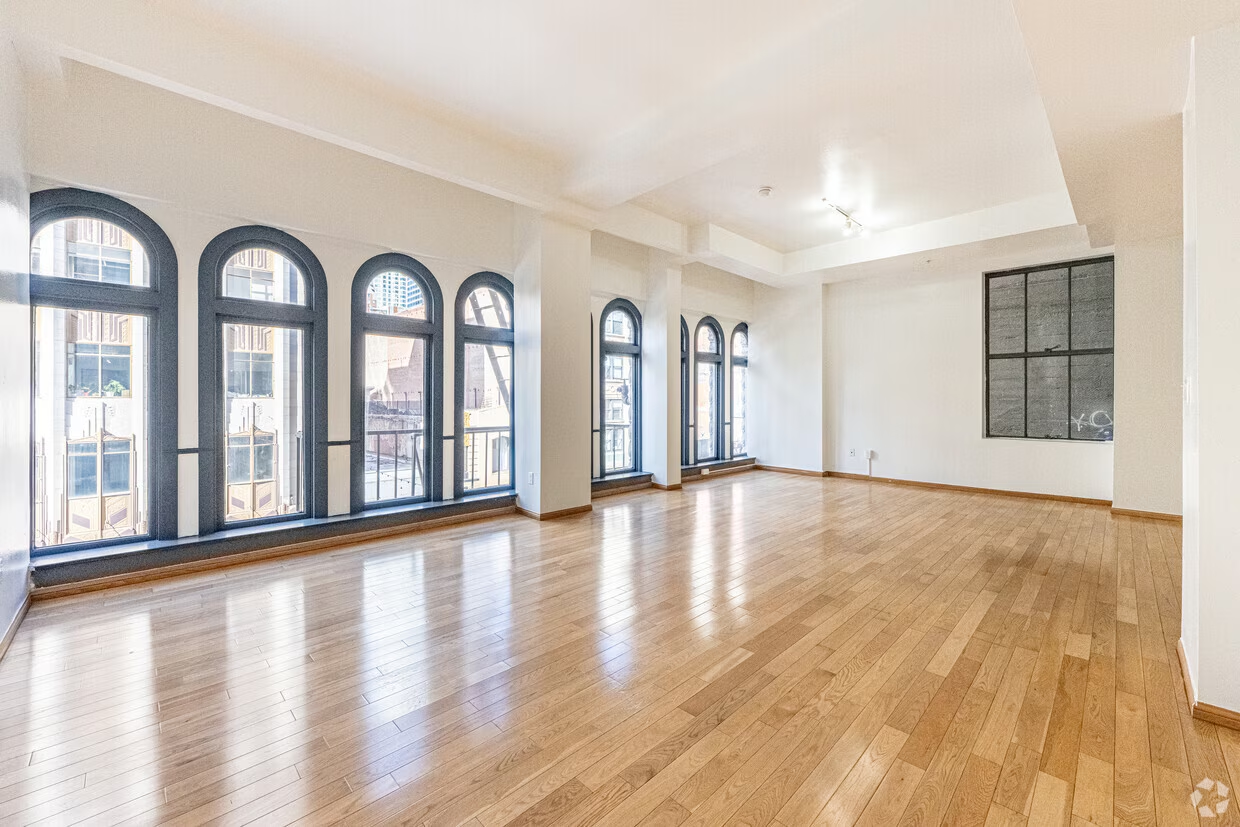
How Does the Design-Build Approach Benefit Adaptive Reuse Projects?
For those of us working in design-build, this ordinance removes one of the heaviest weights we carry: timeline uncertainty. As Garrett Lee, president of Jamison Properties, put it, removing the guesswork from approval timelines "materially improves the feasibility of conversions." The key to success here is bringing on the right design build team to execute your vision. When a single team handles both design and construction, streamlined approvals mean something powerful:
- You can mobilize faster: Design moves forward with confidence that permits will follow, rather than hoping they might.
- You gain cost certainty: Less risk of carrying costs eating away at budgets during endless approval limbo.
- You can optimize smarter: The integrated team can refine designs knowing the regulatory framework supports rather than fights you.
- You create competitive advantage: Speed to market becomes your differentiator in capturing the most promising conversion opportunities.
How Does Building Age Affect Office-to-Residential Conversion Costs?
Not all conversion projects are created equal. A building's age shapes everything about the transformation ahead. Buildings from different code eras require vastly different approaches:
- Pre-1975 Buildings: These often need comprehensive seismic retrofits, which can add substantial cost and time. But they may also carry architectural character that speaks to certain markets. Think high ceilings, detailed facades, a sense of history embedded in the bones.
- 1990s-Era Buildings: The middle ground. Old enough to have lower acquisition costs than newer buildings, but potentially requiring significant code upgrades. You'll need to weigh the trade-offs carefully.
- Post-2000 Buildings: More recently built structures typically need fewer structural upgrades and may skip seismic retrofits entirely. This can reduce construction costs by roughly 10% and significantly compress schedules.
The L.A. Care tower at 1055 W. 7th Street shows what's possible with newer buildings. Built in 1987, this 32-story structure is becoming 686 apartments without requiring a full seismic retrofit. The project can proceed floor-by-floor, working around existing office tenants rather than emptying the building entirely. Its conversion is careful choreography rather than wholesale disruption.
What Are the Current Market Conditions for Adaptive Reuse in Los Angeles?
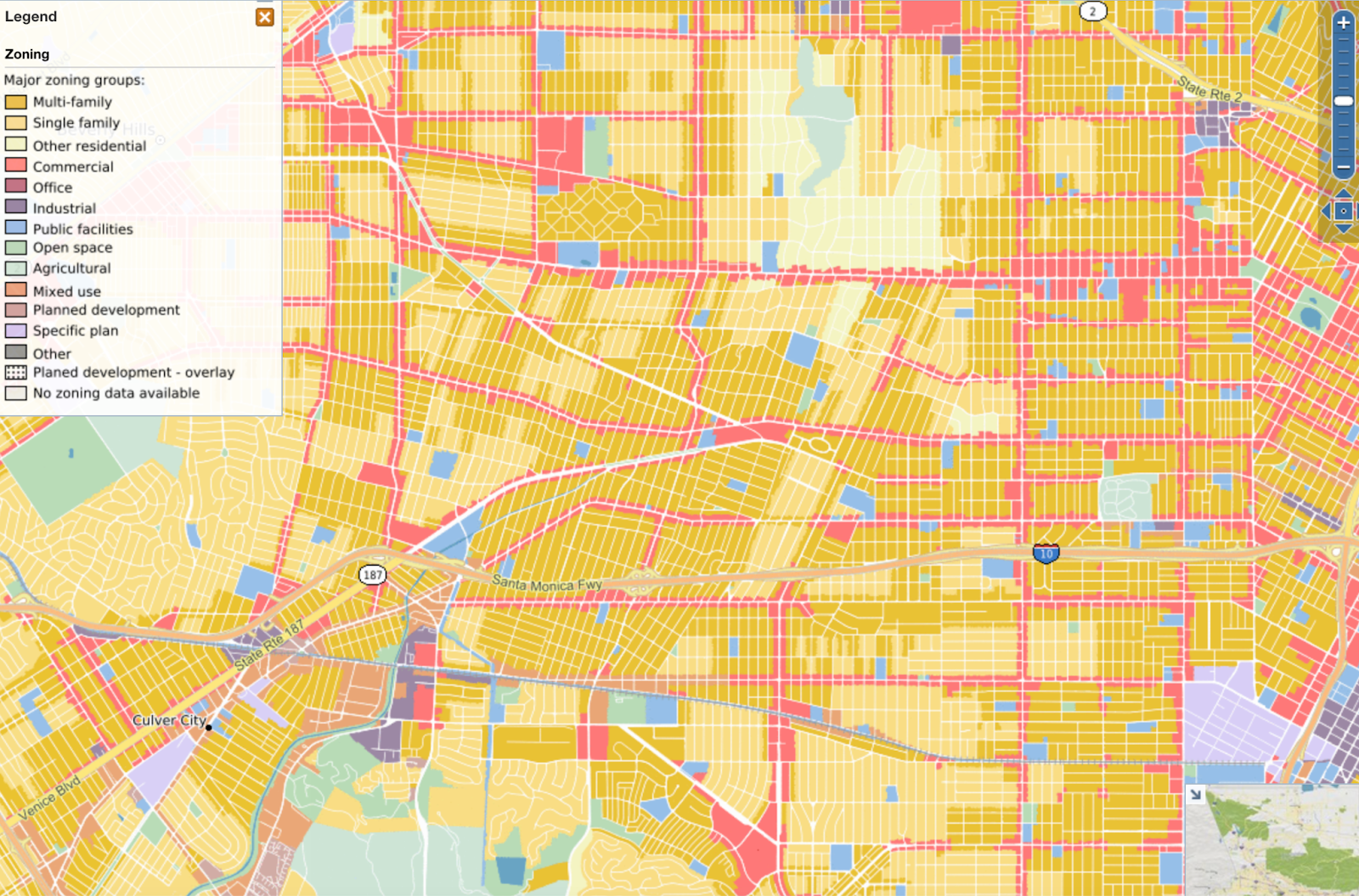
Los Angeles currently holds over 50 million square feet of vacant office space scattered across commercial districts and corridors. That's an enormous pipeline of potential. LA already has approximately 4,388 apartments in various stages of conversion which is the third highest in the nation after New York and Washington, D.C.
But let's be honest about the headwinds:
- Financing: Higher interest rates have made construction loans more expensive, testing the feasibility of projects that once penciled out easily.
- Construction Costs: Tariffs on materials and equipment have pushed prices up. Immigration enforcement has affected the construction workforce, creating constraints where we need flexibility most. This is why hiring a team to help keep up with construction costs is important.
- Regulatory Burdens: Measure ULA, the so-called "mansion tax" on large property sales, adds transaction costs that chip away at profitability. There are talks about a re-do of the tax on the June 2026 ballot.
- Rental Market Uncertainty: Median rents in LA dropped to $2,167 in December 2024, a four-year low. Experts disagree on whether this represents a lasting shift or temporary plateau. The future remains stubbornly unclear.
Despite these challenges, the fundamental math of adaptive reuse still makes sense compared to ground-up construction. Jeremy Baker, cofounder & lead contractor at Letter Four, puts it best: "When you're working with an existing office building, you already have the bones. The structural framework and shell alone can shave millions off a project budget compared to ground-up construction. We're seeing savings in demolition, foundation work, and permitting timelines, which means lower carrying costs and a much faster route to getting residential units to market. The ordinance removes the regulatory barriers that used to make these conversions feel out of reach.”
Challenges When Converting Office Space to Residential
Every conversion project carries a kind of creative tension.The existing building has a logic all its own, shaped by decades of commercial use. Honoring that while reimagining it for the people who will actually live there is where your vision begins. Here are the challenges every developer needs to consider:
- The Natural Light Problem: Office floor plates often run deep which can be an efficient choice for cubicle farms, but genuinely challenging for residential living, where we have specific code requirements for light and ventilation. When a unit's only windows are 40 feet away from its bedroom, no amount of good design fully compensates. The most successful conversions don't fight the floor plate; they work with it.
- Parking: A Legacy Problem: Commercial buildings were built around parking for employees arriving by car, nine to five, five days a week. Residential use changes everything. Parking minimums for apartments differ from office requirements, and the spaces themselves, often sprawling, poorly lit, low-ceilinged structures, present both a challenge and an opportunity.
- Accessibility Upgrades: Older commercial buildings were built to codes that look very different from today's accessibility standards. Converting them to residential use triggers a fresh round of compliance requirements: wider doorways, updated restroom configurations, accessible unit features, elevator capacity and placement. These upgrades are non-negotiable, and they have real cost implications that need to be priced out from the earliest stages of project planning, and not discovered midway through construction. At Letter Four, we budget early and often and provide the resources you need to understand your all-in project budget. Our approach means that accessibility requirements are part of the conversation from day one. Afterall, these are not only City-required upgrades, you also want to make sure that your building is safe and not vulnerable to legal action by tenants or other agencies.
None of these challenges are insurmountable. But they reward the teams who see them clearly, price them honestly, and design through them with both creativity and care.
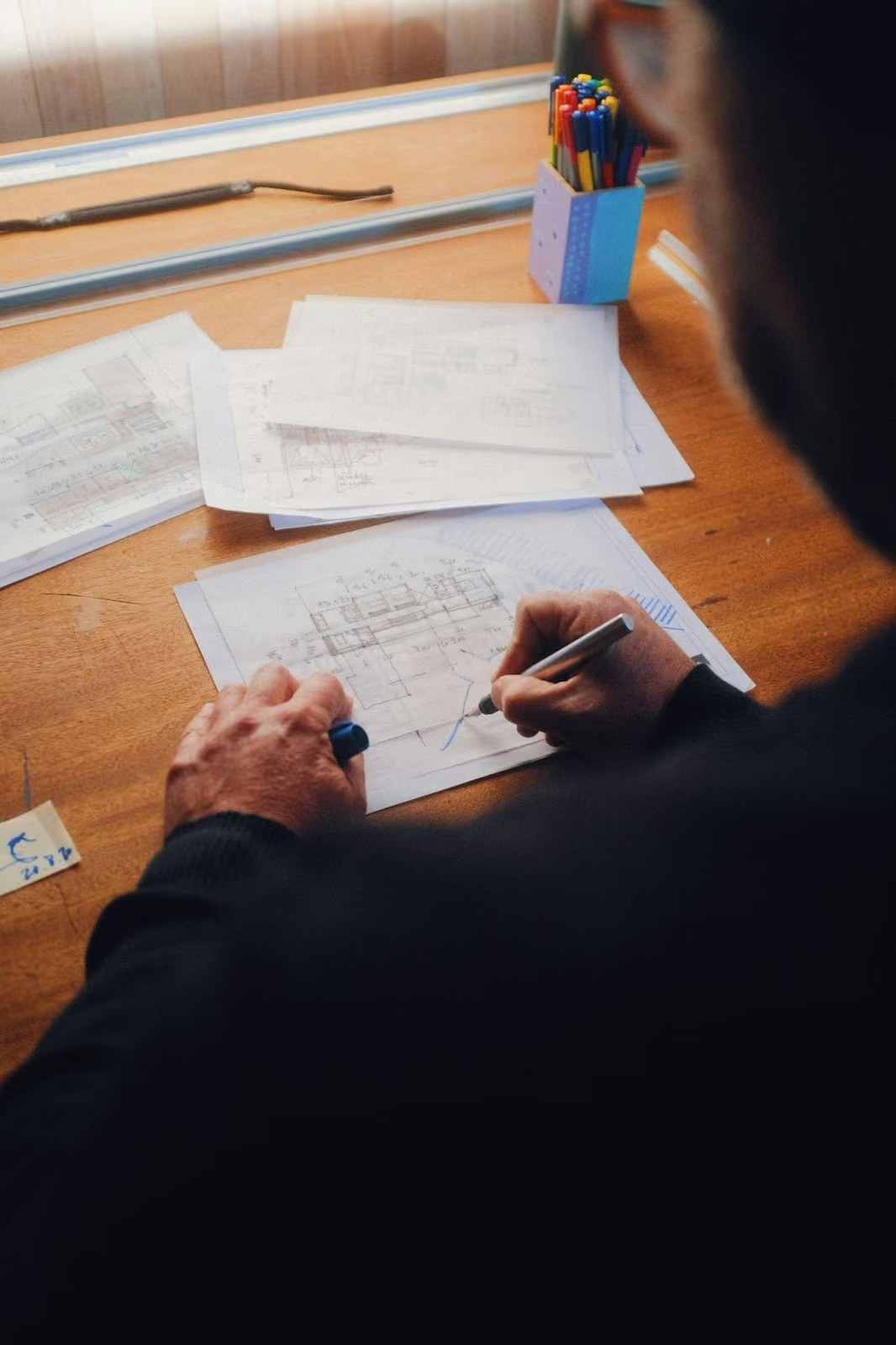
What Design Strategies Maximize ROI in Adaptive Reuse Projects?
The new ordinance allows higher density within converted buildings, enabling more units per floor. This creates opportunities to optimize unit mix and maximize returns.
Consider these design principles:
- Unit Efficiency: Residential buildings need to breathe differently than commercial ones, and mechanical systems designed for open-plan offices rarely translate without significant rethinking. Smaller, thoughtfully configured units positioned along the building's perimeter. Creative unit stacking that turns a liability into a layout strategy. The goal is spaces that feel spacious rather than cave-like where natural light and airflow aren't afterthoughts but organizing principles of the entire design.
- Amenity Integration: Converting underutilized ground-floor retail or garage space into amenities can enhance value without requiring additional land. Every square foot becomes an opportunity. Reimagined amenities like bike storage, co-working areas, fitness centers, or ground-floor retail are possible. The transition requires careful analysis of what's required, what's possible, and what actually serves the people who will call the building home.
- Phased Occupancy: Buildings with partial office tenancy can be converted floor-by-floor, maintaining rental income during construction. This improves cash flow when you need it most, during the expensive middle stretch of the project.
- Flexibility for Future Adaptations: Design with tomorrow's unknowns in mind. Buildings that can adapt to changing market demands will outlive their rigid counterparts.
Which LA Buildings Are Currently Being Converted Under the New Ordinance?
The ordinance's impact is already taking shape across diverse neighborhoods:
Sherman Oaks: IMT Residential is converting the iconic Sunkist headquarters into 95 apartments, now rebranded as the Citrus Commons Luxury Apartments. That brutalist inverted pyramid you've seen from the 101 Freeway a thousand times, will be transformed due to the new ordinance.
Downtown: Jamison Properties has nearly 2,000 converted apartments in its portfolio and is actively redesigning projects to maximize unit count under the new rules.
Commercial Corridors: Strip malls and small commercial centers throughout LA are now conversion candidates. Neighborhood-scale transformations are no longer theoretical, they're happening.

What Financial Incentives Could Further Accelerate Adaptive Reuse in LA?
While the ordinance removes regulatory barriers, many developers and advocates argue that LA should follow other cities in sweetening the deal. New York and Washington, D.C. offer property tax abatements. San Francisco provides transfer tax exemptions. Chicago uses tax-increment financing for redevelopment. Calgary offers direct grants.
The Central City Association and other groups are pushing for LA to implement similar programs, even as the city faces budget constraints. It's a conversation worth having, removing barriers is powerful, but adding incentives could accelerate transformation from possible to inevitable.
What This Means for Developers
The Citywide Adaptive Reuse Ordinance represents a fundamental shift in how Los Angeles thinks about urban development and housing creation. For developers, this translates to real opportunity:
- An Expanded Pipeline: Thousands of buildings across LA are now conversion candidates, waiting for someone with vision to see what they could become.
- Reduced Risk: Streamlined approvals improve certainty. You can plan with confidence rather than crossing your fingers.
- Competitive Edge: Developers with adaptive reuse expertise have a significant advantage. This isn't the time to learn on the job, it's the time to leverage the experience of a team who can support your vision.
- Long-Term Opportunity: The rolling 15-year eligibility creates a continuous flow of new candidates. This isn't a one-time boom, but it's a sustainable pipeline that renews itself annually.
The developers that succeed in this landscape will be those that understand both the technical complexities of adaptive reuse and the market forces shaping demand. At Letter Four, we've built our practice on exactly this integration, bringing together licensed architectural design, general contracting expertise, and interior design under one roof.
Our design-build approach means we can account for every detail and every dollar from the beginning, navigating the structural challenges of conversion projects while keeping costs transparent and timelines predictable.
Adaptive reuse requires the kind of holistic thinking we bring to every project: Understanding how a building's bones can be reimagined, pricing the work accurately before you're committed, and delivering spaces that feel both beautiful and built to last. Whether you're considering a commercial-to-residential conversion or exploring mixed-use possibilities, our team can help you see and realize the potential others might miss.
The buildings are waiting. The opportunity is real. If you're ready to explore what adaptive reuse could mean for your next project, let's talk.


.png)
.avif)


.svg)

















.avif)