

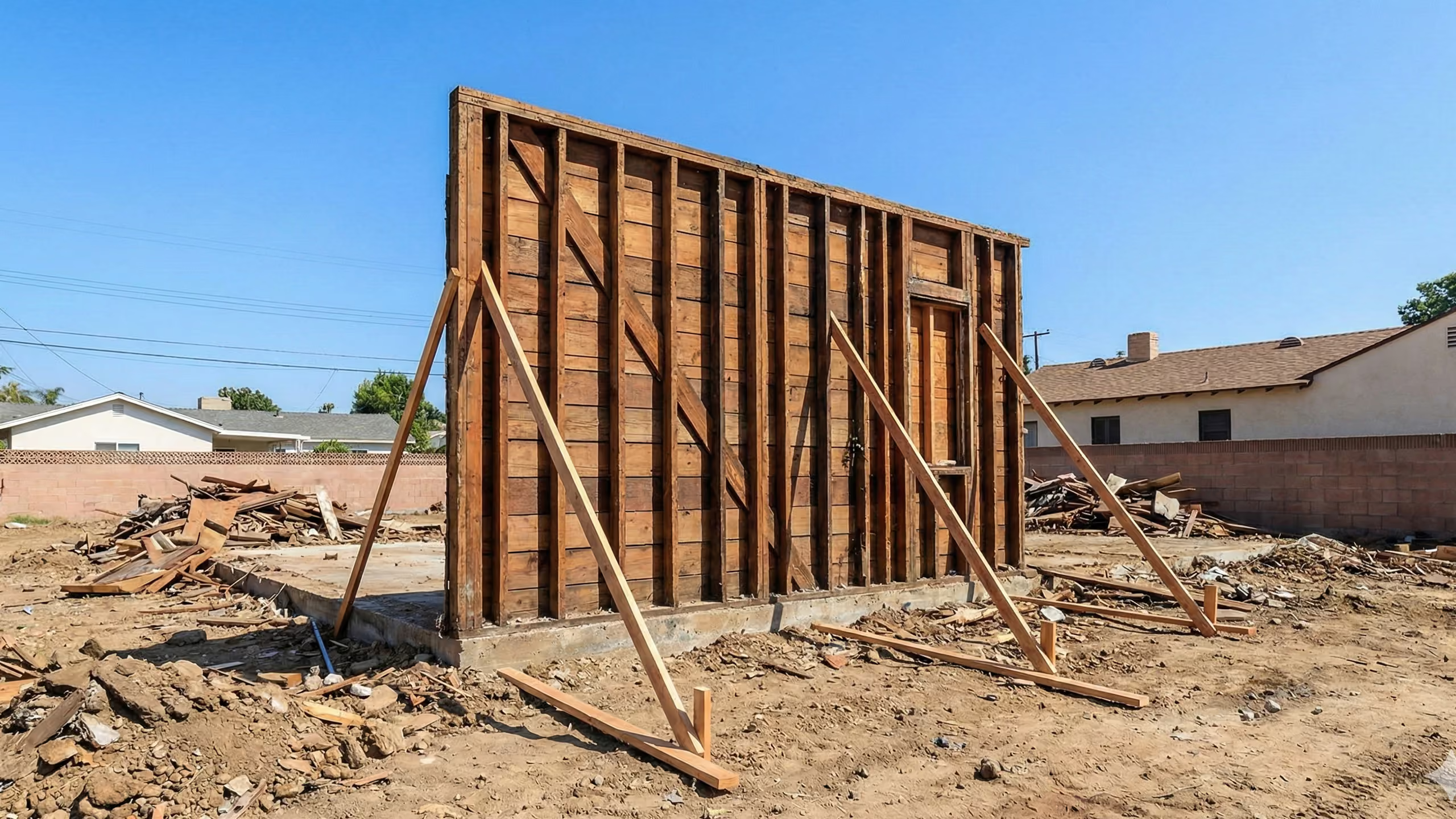
In our fifteen years as a design-build firm serving Los Angeles homeowners, we've heard countless variations of the same dangerous advice: "Just leave one wall standing and you can call it a remodel." This supposed "industry secret" promises to help you sidestep code requirements, avoid square footage limitations, bypass energy efficiency mandates, and even reduce your property taxes. It sounds like the ultimate loophole—a way to essentially build a new house while enjoying the regulatory ease of a simple renovation.
Here's the truth: it's a myth. And worse, it's a myth that can saddle you with serious legal, financial, and structural consequences that will haunt you for years to come.
Letter Four was formed by a licensed architect, Lauren Adams, and a licensed general contractor, Jeremy Baker, as a true owner-partnership. It’s what we call Real Design-Build. We've been called in to rescue projects gone wrong, and we've had uncomfortable conversations with homeowners who discovered—often at the worst possible moment—that their original architect or contractor’s "clever workaround" was actually a ticking time bomb.
Let's unpack this myth, understand what actually defines different types of remodels in Los Angeles, and explore why doing things the right way isn't just legally required—it's ultimately faster, cheaper, and far less stressful.
Understanding Remodel Classifications: Minor vs. Major
Before we can debunk the one-wall myth, you need to understand how the Los Angeles Department of Building and Safety (LADBS) actually categorizes construction projects. These aren't arbitrary distinctions—they're based on the scope and impact of the work being performed.
Minor Remodels
A minor remodel generally involves cosmetic or limited structural changes that don't significantly alter the building's footprint, structure, or systems. This might include:
- Kitchen and bathroom updates that don't relocate major plumbing
- Interior non-structural wall removal or addition
- Replacing flooring, cabinets, or fixtures
- Window and door replacements in existing openings
- Reroof projects (though these still require permits)
- HVAC replacements in kind
Minor remodels typically trigger fewer code requirements and may allow you to maintain some non-conforming conditions that existed prior to your work, under the principle of "grandfathering."
Major Remodels
A major remodel, by contrast, is defined by the Los Angeles Building Code as work that affects more than 50% of the existing structure. This threshold can be triggered by:
- Valuation threshold: When the value of alterations, within any 12-month period, exceeds 50% of the building's replacement cost
- Area threshold: When you're altering more than 50% of the building's square footage
- Structural work: Significant changes to the building's structural system, foundation, or load-bearing elements
- Square footage additions: Adding any significant new space to your home
- System overhauls: Complete replacement of major systems (electrical, plumbing, mechanical)
Once your project crosses into major remodel territory, everything changes. You're required to bring the entire structure into compliance with current codes—not just the new work. This includes:
- Current California Title 24 energy efficiency requirements
- Updated electrical systems to current National Electrical Code (NEC) standards
- Plumbing upgrades including water conservation fixtures
- Seismic retrofitting where applicable
- Fire safety improvements including sprinkler systems in some cases
- Accessibility improvements where required
- Green building requirements, including water-efficient landscaping
The Square Footage Question: Walls Don't Matter when it comes to FAR and Zoning
One of the most pervasive elements of the one-wall myth is the belief that leaving a wall standing allows you to avoid square footage limitations. Let's be absolutely clear: this is categorically false.
Los Angeles zoning regulations impose limits on how large your home can be relative to your lot size through Floor Area Ratio (FAR) calculations. In most residential zones:
- R1 zones (single-family residential): FAR typically ranges from 0.5 to 0.55, depending on lot size and location
- Hillside areas: Often restricted to lower FAR (sometimes 0.45 or less)
- Baseline Hillside Ordinance areas: Subject to even stricter limitations with additional review processes
Here's what matters for FAR calculations: the total square footage of your structure—period. The Building Department doesn't care whether you demolished your entire house or left three walls standing. They measure the final result. If you're over your allowable FAR, you're in violation, regardless of how many original walls remain.
We've seen homeowners discover this the hard way. They spent tens of thousands of dollars on architectural work for a "remodel" that left one wall standing, only to find during plan check that they exceeded their allowable FAR and needed to go back to the drawing board. The options at that point are all painful: reduce the square footage and eliminate key spaces, apply for a variance (expensive and often unsuccessful), or try to dupe the plan check engineer and pay for it later when you’re in construction and the inspector catches on (the all around most costly choice of all).
Hillside Properties: Where the Stakes Are Even Higher

If your property is in a designated Hillside area—and much of desirable Los Angeles falls into this category—you face additional layers of regulation that the one-wall trick absolutely cannot bypass:
- Hillside Design Review: Projects in these zones often require discretionary review by the Planning Department, regardless of whether you're calling it a remodel or new construction
- Grading restrictions: Limits on how much earth you can move, which affects foundation work
- Geotechnical requirements: Soils reports and engineering that must address the existing conditions
- Height limits: Often more restrictive in hillside areas and measured from multiple points
- Setback requirements: Distance from property lines, which new additions must meet
The Baseline Hillside Ordinance, which affects properties in the Santa Monica Mountains and other areas, is particularly stringent. These regulations were designed to protect sensitive hillside environments, and they include enhanced plan check processes, potential environmental review, and community input requirements.
Leaving one wall standing doesn't exempt you from any of this. If the Planning Department determines that your project constitutes a significant alteration—which it will if you've essentially built a new house—you'll go through the full review process anyway. We've met homeowners who come to us because the architect they were working with did not do their due diligence and delayed the project by 18-24 months by trying to fly under the radar with the one-wall approach, only to be caught during plan check or worse, inspections.
Code Compliance: You Can't Pick and Choose
Perhaps the most dangerous aspect of the one-wall myth is the belief that it allows you to avoid bringing your home up to current building codes. This misconception can create serious safety hazards and future liability issues.
How Code Requirements Actually Work
California Building Code (CBC) and Los Angeles amendments establish minimum safety standards for construction. When you pull a permit for work, the scope of that work determines how much of your home must be brought into compliance:
For minor, isolated work: You typically only need to bring the specific area being modified into compliance with current codes. Pre-existing non-conforming conditions in other areas can often remain.
For major remodels: Once you cross that 50% threshold—whether through valuation, area, or structural alterations—the entire home must be brought into compliance. This is non-negotiable.
The one-wall standing approach might be an attempt to stay under this threshold, but here's the problem: if you're essentially rebuilding the house (which is what you're doing if you're only leaving one wall), you've clearly crossed into major remodel territory. The Building Department isn't stupid, and their inspectors have seen every trick in the book.
Specific Code Requirements You Cannot Avoid
When your project triggers a major remodel classification, expect to address:
Electrical: The entire home must meet current NEC standards. This often means:
- Panel upgrades to handle modern loads
- GFCI and AFCI protection throughout
- Proper grounding systems
- Updated outlet spacing and placement
Plumbing: Current California Plumbing Code requirements include:
- Low-flow fixtures throughout (1.28 GPF toilets, 1.5 GPM showerheads)
- Proper venting systems
- Water heater safety devices
- Potential sewer lateral inspections and upgrades
Energy Efficiency (Title 24): California's energy code is among the nation's strictest:
- Insulation upgrades throughout the building envelope
- High-performance windows
- Efficient HVAC systems with proper duct sealing
- Solar-ready construction (and increasingly, actual solar installation)
- Cool roof requirements in many cases
Structural/Seismic: Los Angeles is earthquake country:
- Foundation anchoring
- Cripple wall bracing
- Proper shear wall design
- Moment frame connections
- Soft-story retrofitting where applicable
Fire Safety: Depending on the home's size and configuration:
- Fire sprinkler systems (required for new homes over 5,000 square feet in Los Angeles)
- Proper fire-rated assemblies between attached garages and living spaces
- Smoke and carbon monoxide detectors hardwired throughout
Green Building Requirements
Los Angeles has embraced aggressive sustainability goals, which translate to real requirements for your project:
LA Green Building Code: Mandatory measures include:
- Water-efficient landscaping with irrigation controls
- Construction waste management (diversion from landfills)
- Enhanced commissioning of building systems
- Indoor air quality measures
- Electric vehicle charging infrastructure in many cases
These aren't suggestions—they're code requirements that apply to major remodels and new construction alike. And don’t you want to build a safe, fully code-compliant home after all?
The Tax Reassessment Myth

We frequently hear homeowners express concern about property tax reassessment, believing that calling a project a "remodel" rather than "new construction" will help them avoid a significant increase in their tax basis. This leads to the one-wall strategy: keep it a remodel, keep your taxes low.
The reality: California's property tax system under Proposition 13 doesn't work this way.
The Assessor's Office will reassess your property based on new construction regardless of what you call it or how many walls remain. Their determination is based on:
- The scope and value of improvements made
- Whether the work constitutes a substantial improvement to the property
- The effective creation of a "new" structure
If you've gutted your home down to one wall and rebuilt everything else, the Assessor will rightfully determine that you've created substantial new value. The presence of one original wall won't change their analysis. They'll reassess the improved portion of your property at current market value, which is exactly what would happen with new construction.
Worse, if you attempt to misrepresent the scope of work to the Assessor's Office, you're potentially committing tax fraud—a far more serious problem than simply paying fair taxes on your improved property.
The Inspection Nightmare
Even if you somehow slip through plan check with a one-wall remodel strategy, you'll face a harsh reckoning during inspections. This is where many projects completely fall apart.
Building inspectors are experienced professionals who understand construction. When they arrive at your site and see:
- A completely new foundation
- All new framing except one wall
- Entirely new systems (electrical, plumbing, HVAC)
- New roof structure
- Everything else built from scratch
They're going to recognize what's really happening. At that point, several things can occur:
- Stop Work Order: Your project gets red-tagged, and all work must cease immediately
- Plan Resubmission: You may be required to submit entirely new plans reflecting the true scope of work
- Full Code Compliance: You'll be required to bring everything into current code compliance
- Additional Fees: Penalties and recalculated permit fees based on actual valuation
- Extended Timeline: Months or years of additional delays
- Contractor Issues: Your contractor may walk away from the project, or your relationship becomes adversarial as blame gets assigned
The financial and emotional toll of stopping work and facing major delays and increased costs is absolutely devastating for homeowners. It’s easy to spend an additional $200,000-300,000, or more and another 18 months to resolve a situation like this—far more than doing it right from the beginning would have cost.
The Structural Integrity Problem
Beyond regulatory issues, there's a fundamental engineering problem with the one-wall approach: you could be compromising the structural integrity of your home.
Modern homes are engineered as complete systems. The walls, roof, foundation, and lateral bracing all work together to resist loads—particularly earthquake forces in Southern California. When you demo a house down to one wall and build everything else new, you create problematic conditions:
- Load path discontinuities: Forces don't transfer properly through the structure
- Material compatibility issues: Connecting new framing to old creates weak points
- Differential settling: New foundation elements may settle differently than old
- Moisture and deterioration: That one remaining wall may have hidden damage or decay
- Code compliance gaps: The old wall wasn't built to current standards and creates non-conforming conditions
A licensed structural engineer—which our firm employs—would never design a project this way. The entire structure should work as a cohesive, properly-engineered system. That one remaining wall becomes a liability rather than an asset.
The Insurance and Resale Complications

Think ahead to when you eventually sell your home or need to make an insurance claim:
Title Issues: If your work wasn't properly permitted or misrepresented the scope, you may face:
- Title defects that prevent sale
- Buyer demands for retroactive permits and inspections
- Reduced sale price to account for unpermitted work
- Failed sales at the last minute when issues are discovered
Insurance Problems: Insurance companies investigate major claims. If you have a fire, earthquake damage, or other significant loss and they discover that your "remodel" was actually unpermitted reconstruction:
- Claim denial
- Policy cancellation
- Potential fraud investigation
Disclosure Requirements: California law requires sellers to disclose unpermitted work. If you don't disclose and the buyer discovers it later, you face potential lawsuits for years after the sale.
How to Do It Right: The Letter Four Approach
After fifteen years of practice in Los Angeles, we've developed an approach that serves homeowners far better than shortcuts:
1. Comprehensive Pre-Design Analysis: Before drawing a single line, we analyze:
- Zoning and FAR limitations
- Hillside designations and requirements
- Existing conditions and code compliance gaps
- Realistic project scope and budget
2. Integrated Design-Build Process: Because we're both architects and contractors, we:
- Design within realistic construction budgets
- Identify code issues early in design
- Provide accurate cost projections
- Streamline communication and decision-making
3. Proactive Code Compliance: We work with the Building and Planning Departments to:
- Understand current requirements before design
- Submit complete, compliant plans the first time
- Build relationships with plan checkers and inspectors
- Resolve issues before they become problems
4. Transparent Process: We give homeowners realistic expectations about:
- Required code upgrades and their costs
- Permit timelines (which can be 6-12 months in LA)
- Inspection processes and potential issues
- Total project investment
Yes, it takes longer and costs more upfront. A properly permitted major remodel in Los Angeles typically requires:
- 6-8 months of design and permitting
- Full code compliance upgrades
- Complete engineering and architectural documentation
- Potential Planning Department review for hillside or HPOZ properties
But this approach provides:
- Peace of mind that work is legal and safe
- No surprises during construction
- Full protection of your investment
- Smooth resale when the time comes
- Proper insurance coverage
- A home built to last generations
The Bottom Line
The "one wall standing" myth persists because it promises something every homeowner wants: a way to save money and time on a major project. But it's a false promise that can cost you far more than doing things correctly from the start.
Los Angeles building and zoning regulations exist for important reasons:
- Life safety: Protecting you and your family from structural failure, fire, and other hazards
- Community welfare: Ensuring responsible development that doesn't overwhelm infrastructure or neighborhoods
- Environmental protection: Reducing resource consumption and protecting sensitive areas
- Property rights: Ensuring fair treatment and preventing neighbors from creating dangerous or inappropriate conditions
As licensed architects and contractors who've built our reputation on integrity and quality, we've seen too many families suffer the consequences of cutting corners. The stress, financial loss, and legal complications far exceed any perceived savings from the one-wall approach.
If you're considering a significant remodel—especially in hillside areas or if you're approaching your FAR limits—work with professionals who will guide you through the process correctly. At Letter Four, we've successfully navigated hundreds of complex Los Angeles projects, and we've never had to resort to regulatory tricks or shortcuts.
Your home is likely your largest investment and your family's sanctuary. It deserves to be designed, permitted, and built the right way—even if that means taking a few extra months and investing in proper code compliance. The alternative—leaving one wall standing and hoping nobody notices—is a risk that's simply not worth taking.
Ready to discuss your project the right way? Letter Four combines fifteen years of experience in Los Angeles with the unique advantages of having licensed architects and contractors working as partners. We'll help you understand what's actually possible on your property, design a home that serves your needs, and build it to the highest standards of quality and code compliance.
Because at the end of the day, the only good remodel is one that's done right.
Book a call with our expert team and let’s discuss how Letter Four can help you design and build your dream home.

.png)

.svg)

















.avif)