

What Saved This Pacific Palisades Home from the Fire?
If you lost your home in the Palisades Fire there is nothing in a case study that softens what that means. We are not here to talk about the silver lining, but we are here to talk about what worked. That is what most rebuilders we meet want to understand right now: not just what code requires, but what actually held up.
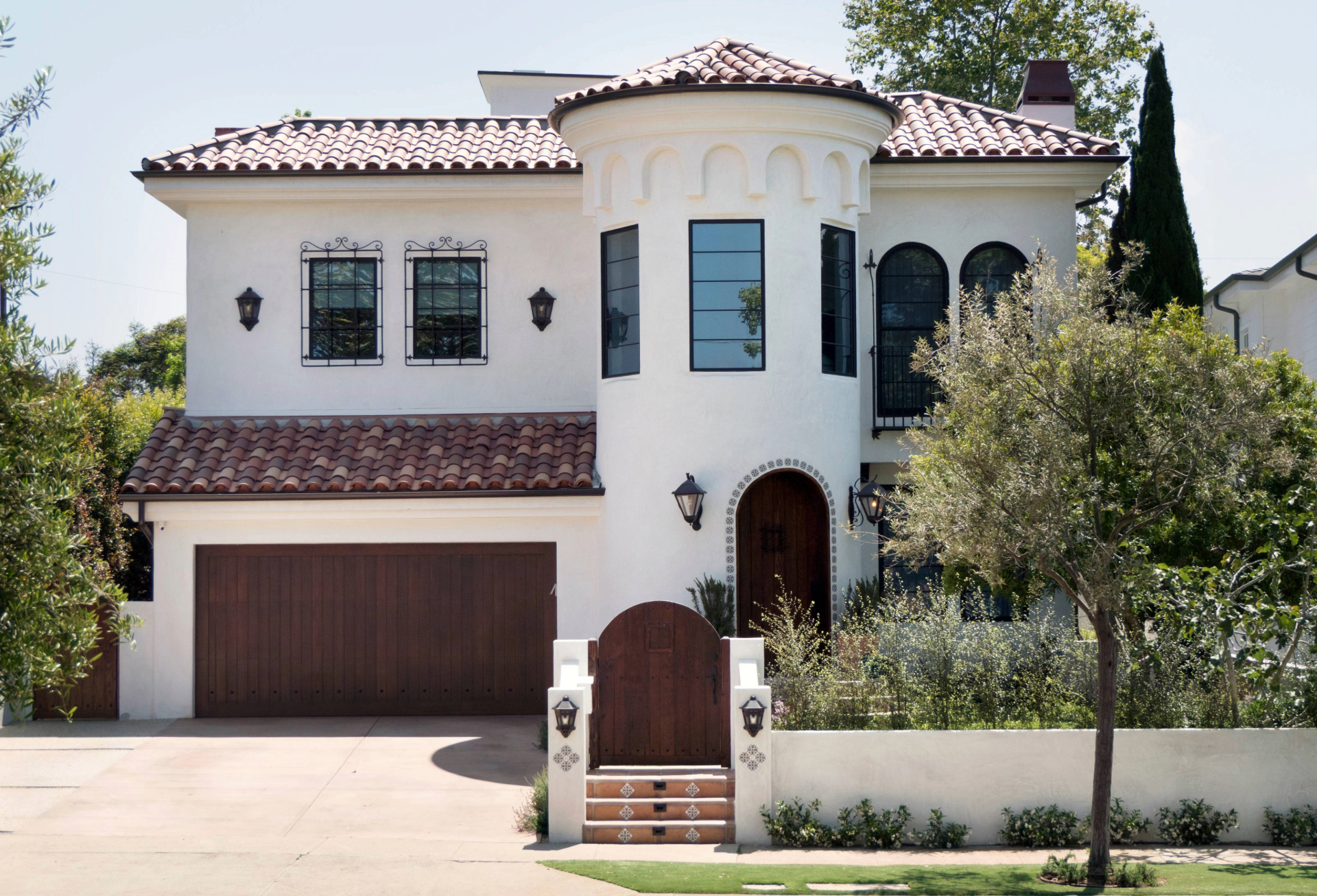
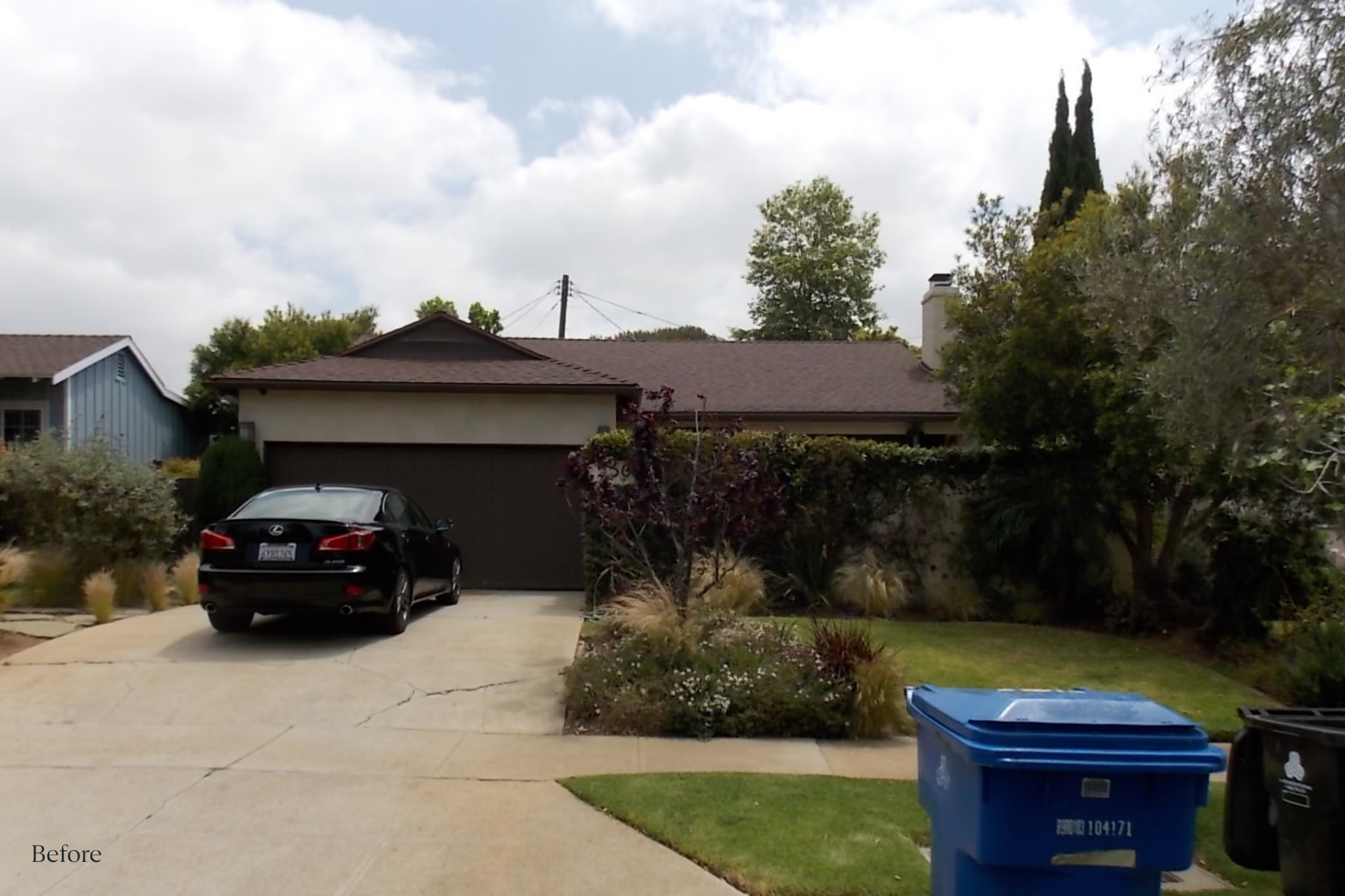
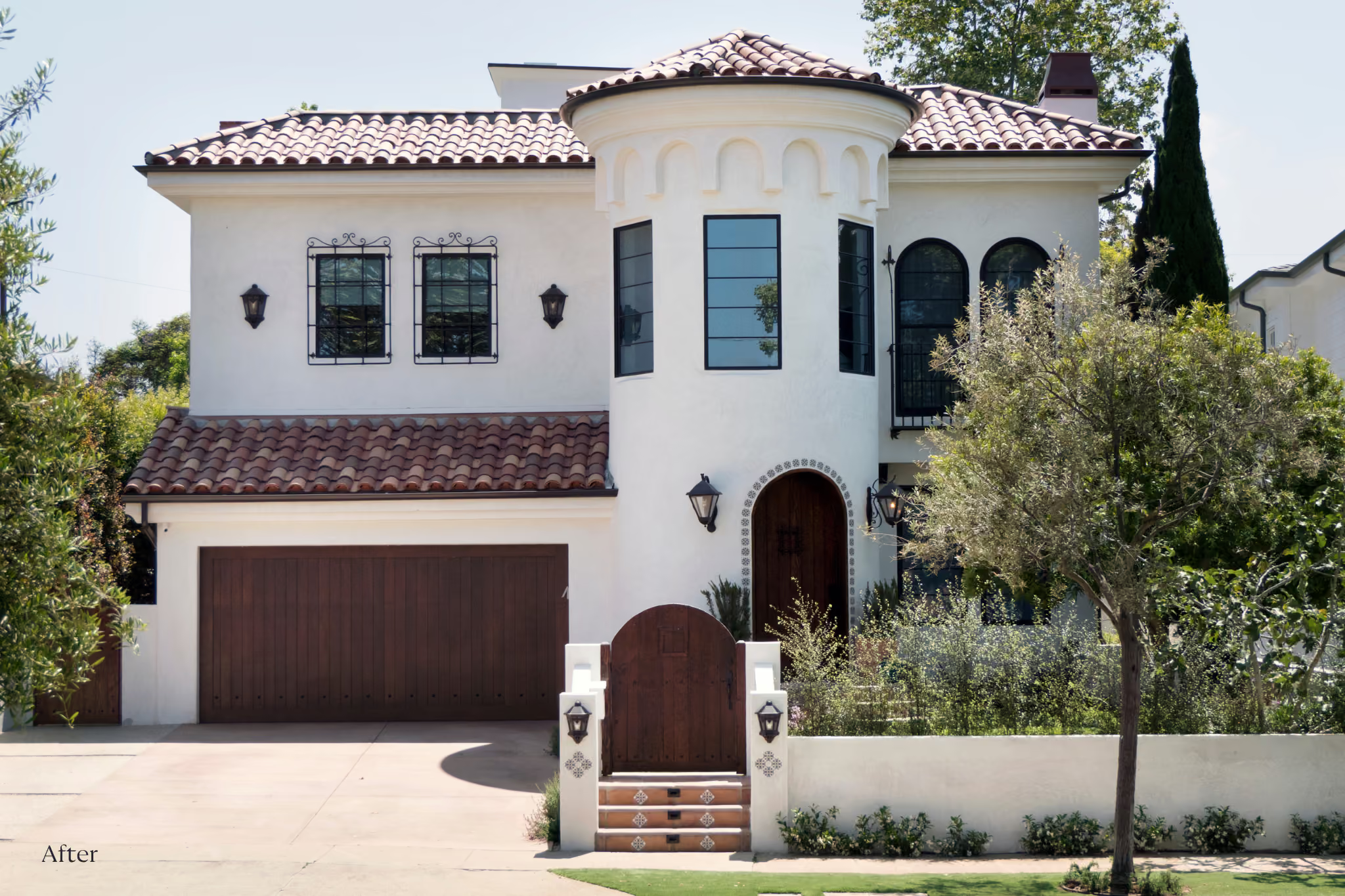
In 2015, Letter Four completed a major remodel and second-story addition on a Spanish-style home in Pacific Palisades, CA. The codes were different then and the area was not yet classified as a Very High Fire Hazard Severity Zone in the way it is today. Wildfire risk was a consideration, not the design driver.
Ten years later, the Palisades Fire moved through the neighborhood and the home is still standing. The construction method used is conventional wood-framed construction. What protected it was a set of detailing decisions that, at the time, were mostly about durability and design. Today, those same decisions are central to how we build in wildfire zone areas.
This is a record of what saved that home, why those details matter, and how we apply what we learned to the fire rebuild work we are doing now.
———
Why did this Pacific Palisades home survive the 2025 fire?
The Palisades Fire was the most destructive wildfire in the history of the city of Los Angeles. It started on January 7, 2025, was not fully contained until January 31, and destroyed more than 6,800 structures across Pacific Palisades, Topanga, and Malibu. Wind-driven embers, not direct flame contact, are what carried the fire from house to house. That is the pattern in nearly every major California wildfire: embers travel miles ahead of the fire front, land on a structure, find a vulnerability, and ignite the home from there.
The custom home we built for a wonderful family back in 2015 had three details that closed off the most common ember entry points. Each one was a decision driven by the architecture of the house and a commitment to long-term durability. Each one meets or exceeds what current Wildland-Urban Interface code recommends and requires.
Those three details were enclosed stucco eaves, a Class A clay tile roof, and non-combustible tile and composite decking on horizontal surfaces. None of them are unusual. All of them matter.
What is the difference between open wood eaves and enclosed stucco eaves?
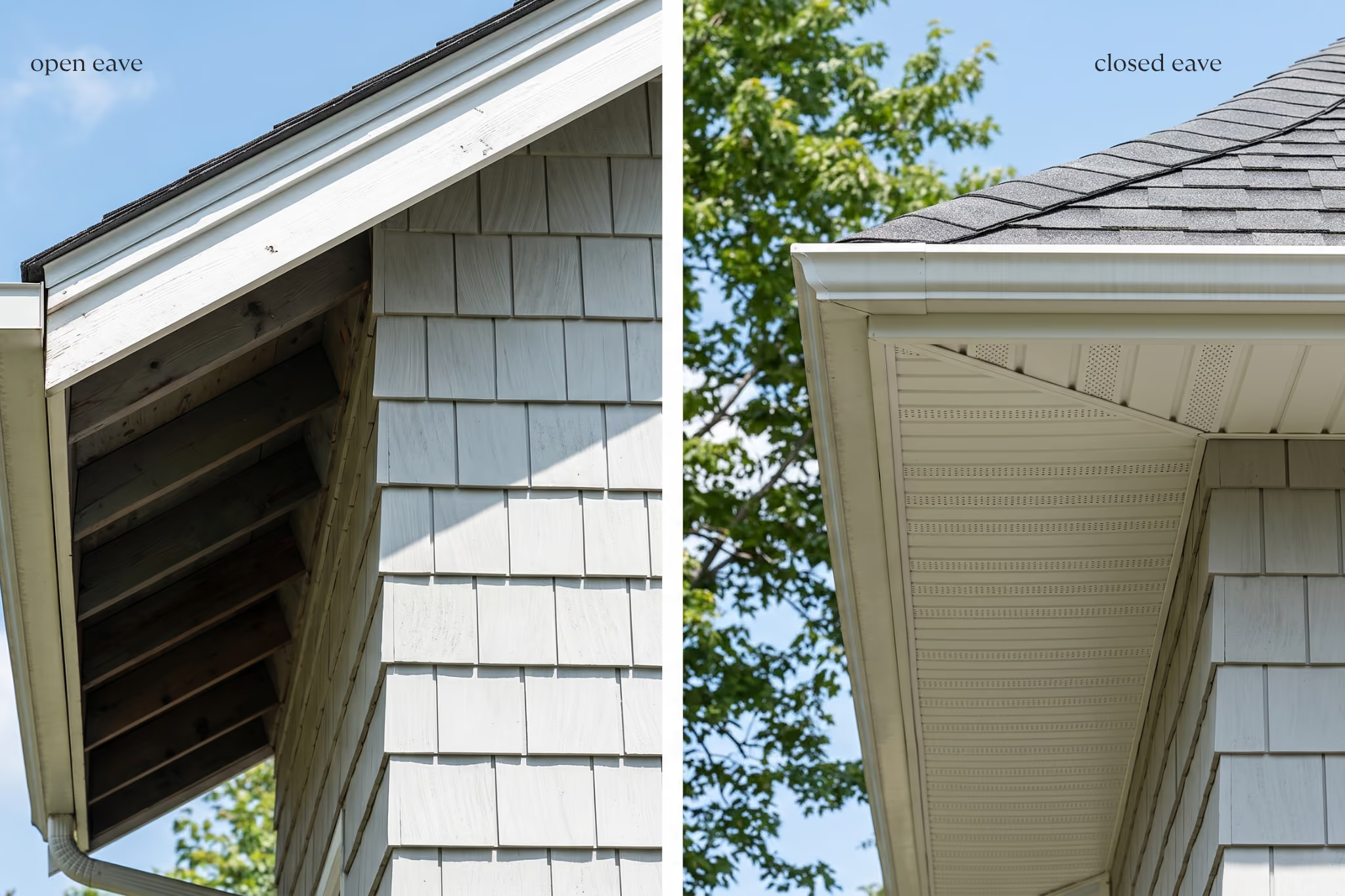
Open wood eaves are one of the most common ember traps in California residential construction. The horizontal underside of an exposed eave creates a pocket where wind-driven embers can collect, lodge against unprotected wood, and smolder into ignition. Once the eave catches, the fire moves into the attic, and the structure is lost from inside.
Enclosed stucco eaves remove the pocket entirely. The soffit becomes a continuous, non-combustible plane. There is no exposed wood for embers to catch on, and the stucco itself does not ignite. On this Palisades home, every eave on the structure was enclosed and finished in stucco. Embers had nowhere to land and nothing to feed on.
California's WUI code, originally codified in California Building Code Chapter 7A and now consolidated into the California Wildland-Urban Interface Code as of January 2026, requires eaves and soffits to be protected by ignition-resistant materials or noncombustible construction. Enclosed stucco eaves clear that requirement comfortably. They are also a defining feature of Spanish Colonial Revival architecture, which is why the detail belonged on this house in the first place.
———
Why does a Class A clay tile roof matter for fire survival?
Roof assemblies are the single largest exposed surface on any home. They take the most ember load during a wildfire. A Class A roof is the highest fire rating in the California Building Code, and it is required for any new construction or significant re-roof in a Fire Hazard Severity Zone.
The Palisades home has a Class A clay tile roof. Clay tile is non-combustible by nature. It does not warp under radiant heat the way some composite materials can, and the tile profile sheds embers rather than catching them. Equally important: the underlayment beneath the tile and the detailing at valleys, ridges, and eaves were all executed to prevent ember intrusion into the roof assembly. A Class A rating on the tile alone is not enough. The full assembly has to be specified and built to resist embers, not just flame.
This is one of the places where a design-build firm matters. The tile, the underlayment, the cap sheet, the metal valley flashing, the bird stops at the eaves, the way the ridge is detailed: these are decisions made together, with one team accountable for the outcome. When those layers are coordinated, you get a roof that performs as a system. When they are handed off between separate trades without coordination, vulnerabilities show up at the joints.
———
Are non-combustible decks really safer than wood decks in a fire zone?
Yes, and the data from the 2025 fires reinforces this fact. Wood decks were one of the most consistent ignition points in the homes that did not survive. Embers fall through the gaps between deck boards, accumulate on the framing and joists below, and ignite the substructure. From there, the fire climbs the wall of the house.
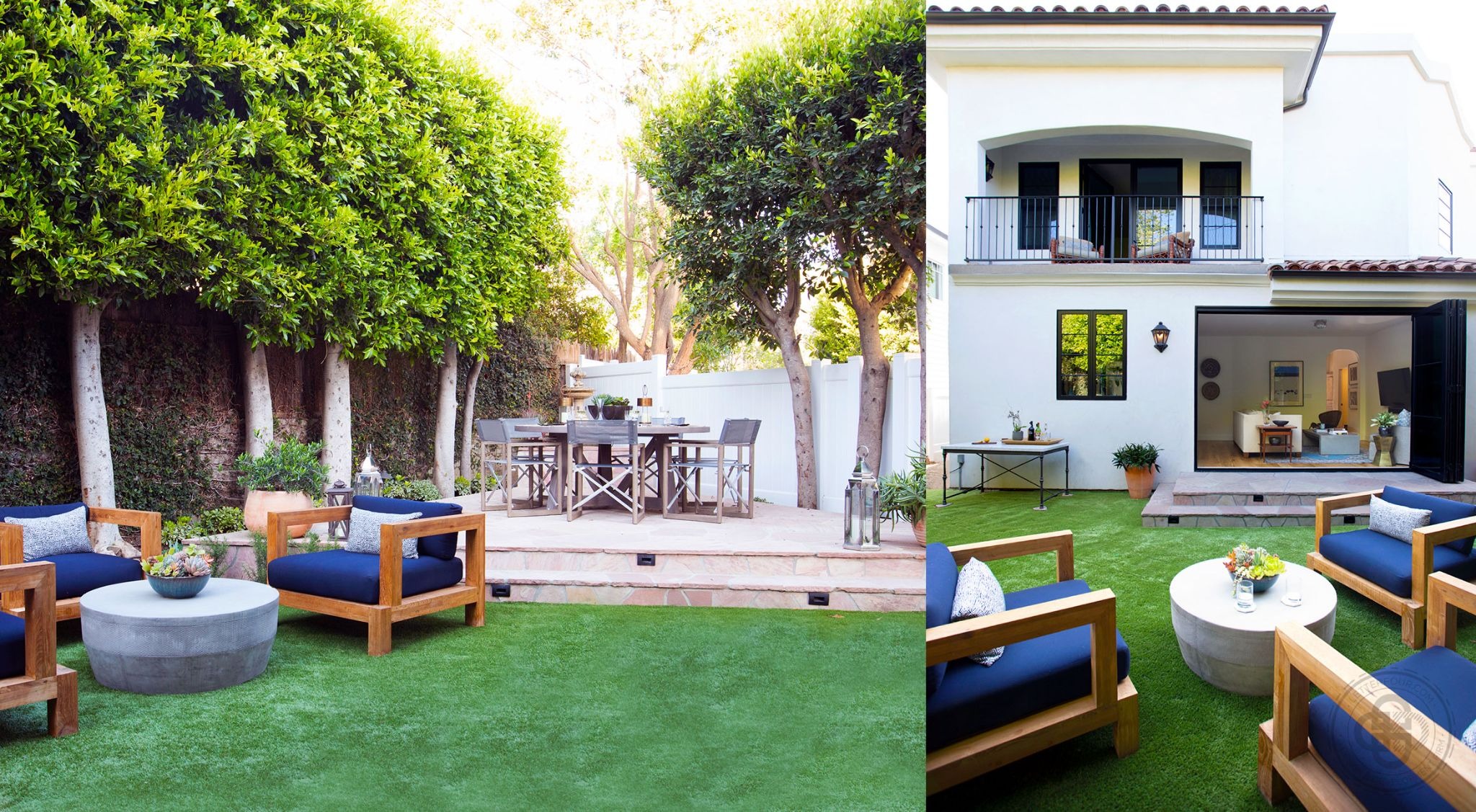
On this Pacific Palisades home, the horizontal surfaces were tile and non-combustible composite decking. Embers landed and went out. There was no accumulated combustible debris underneath, no exposed wood framing within the ignition zone, and no path for fire to climb from the deck to the wall.
Current WUI code requires decking surfaces, stair treads, risers, and landings within ten feet of the primary structure to be built of ignition-resistant materials, non-combustible materials, or assemblies that pass specific fire tests. Non-combustible tile and composite materials meet this. Standard pressure-treated wood decking does not.
Letter Four designed and built a roof deck accessed via a spiral stair as a way of capturing ocean views and providing additional living and entertaining space. While the deck looks like wood, it is actually a composite decking from Trex or Timbertech that is highly fire resistant. It won’t catch fire like wood and actually melts at very high temperatures, rather than igniting. We typically specify one of these products due to their durability and low maintenance.
———
How does Letter Four exceed code on Pacific Palisades fire rebuilds?
The 2015 Palisades home was wood-framed conventional construction, and it survived. That tells us something important: the structural system is not the deciding factor. The detailing is. A wood-framed home built with the right exterior assemblies can actually outperform a home built with more advanced framing if the detailing is wrong.
On every Pacific Palisades and Malibu fire rebuild we are working on now, we apply the lessons from that 2015 project and exceed current code in several specific ways:
• Enclosed eaves and soffits, finished in non-combustible material on every elevation. No exposed rafter tails or open eave construction, even where code might permit it.
• Class A roof assemblies specified as a complete system, not just at the covering. That includes underlayment, valley flashing, ridge and hip detailing, and ember-resistant venting.
• Ember-resistant attic and crawl space vents tested to ASTM E2886 and listed by the California State Fire Marshal. We use baffled or self-closing designs over standard wire-mesh screens.
• Non-combustible or ignition-resistant materials on all decking, walking surfaces, and horizontal projections within ten feet of the structure.
• Dual-pane tempered glazing on all windows in the WUI zone, with frame materials specified for fire performance.
• Seismic detailing that addresses both lateral force resistance and the connections that fail first in a major event. Earthquakes and fire are not separate design problems in Los Angeles. They have the same conversation.
None of this is unreachable. It is the standard of care we believe Pacific Palisades fire rebuild work requires, and it is the standard our clients are entitled to.
———
Why does an integrated design-build team matter for fire rebuild work?
A fire rebuild is not a typical custom home project. The constraints are different and insurance proceeds are time-bound. Permitting requires WUI compliance review on top of standard plan check. Material selections have to be defended on technical grounds, not just aesthetic ones. Every decision has to hold up under the question every wild fire survivor eventually asks: will this house survive the next one?
Letter Four is one team. Lauren Adams, our principal architect (CA License #C30146), and Jeremy Baker, our principal general contractor (CA License #B1028949), work on the same projects from the first feasibility conversation through final inspection. The design and the build are not handed off. There is no gap where a detail gets lost in translation between an architect's drawing and a contractor's bid.
For a custom fire rebuild contractor relationship, that integration is the difference between a home that is technically code-compliant and a home that is genuinely resilient. The 2015 Palisades project is the proof of concept. The current rebuilds are where we apply it.
———
If you are rebuilding in Pacific Palisades, Altadena, or Malibu and want to talk through what fire-resilient construction looks like for your specific lot and your specific home, we would welcome the conversation. We are working with property owners who are rebuilding in all of the post-fire neighborhoods. We know what these projects ask of the people leading them. Book a call with Lauren and Jeremy here on our website.
———
FREQUENTLY ASKED QUESTIONS
Q: What does it cost to rebuild a fire-hardened home in Pacific Palisades?
A: Costs vary widely based on lot conditions, square footage, finish level, and how much of the original foundation and site work can be reused. As a starting reference, fire rebuild projects in Pacific Palisades are generally trending higher per square foot than comparable pre-fire custom home work. This is driven by WUI material requirements, longer permitting timelines, and the constraints of working in an active recovery zone. Letter Four works as a fire rebuild contractor on a fully integrated basis, which keeps cost decisions transparent through every stage. If you’ve already started working with an architect to rebuild your home, we can still help as we also build resilient homes that we have not designed.
Q: How long does the Pacific Palisades fire rebuild permit process take?
A: Permitting timelines in the post-fire Palisades are evolving as the City of Los Angeles and LA County process an unprecedented volume of rebuild applications. The One-Stop Rebuild Center has streamlined the process for like-for-like rebuilds, but custom rebuilds and homes that involve significant scope changes go through full plan check, including WUI compliance review and fire department review. Realistic expectations for a custom Pacific Palisades fire rebuild are several months for permitting, with the timeline shaped by lot specifics, design complexity, and current department backlogs. We track current timelines on every active project and keep our clients fully informed on their project schedule at all times via their custom project dashboards..
Q: Does fire-resistant construction lower home insurance premiums in California?
A: It can, and increasingly it determines whether a home is insurable at all. California's home insurance market has tightened significantly in fire zones, with several major carriers reducing or pausing new policies in high-risk areas. Homes built to current WUI standards, with documented Class A roofs, ember-resistant vents, non-combustible decks, and other hardening details, are more attractive to remaining carriers and to the California FAIR Plan. Some insurers now offer mitigation discounts under California's Safer from Wildfires framework. We document hardening details during construction so homeowners have the records they need for underwriting.
Q: What is non-combustible construction and is it required in the Palisades?
A: Non-combustible construction refers to the use of materials that do not ignite, support combustion, or release flammable vapors when exposed to fire and embers. Examples include steel framing, concrete, stucco, masonry, clay and concrete tile, and certain mineral-based composites. California's WUI code does not require fully non-combustible structural framing in most residential rebuilds. It does require non-combustible or ignition-resistant exterior assemblies: roofs, eaves, exterior walls, decks, and vents. A wood-framed home built with non-combustible exterior assemblies, like the 2015 Palisades home that survived the fire, can perform very well. The framing is less important than the envelope assembly itself. That said, we are employing many different methods of construction where clients' budgets permit in order to exceed fire and earthquake code requirements and give our clients the peace of mind they deserve.
Q: Should I rebuild my Pacific Palisades home or sell the lot?
A: This is one of the most personal decisions a fire-affected homeowner faces, and there is no universal right answer. The factors that usually matter most are insurance proceeds and how they align with rebuild costs, lot value in the current market, family ties to the neighborhood, and the homeowner's capacity for a multi-year rebuild process. Some of our clients are committed to returning to the Palisades. Others are using their settlements to relocate. We do not push either direction. What we offer is a clear-eyed feasibility assessment: what your specific lot can support, what a rebuild would realistically cost and take, and what the home could be if you decide to return.
Q: Why hire a design-build firm instead of a separate architect and contractor?
A: On a fire rebuild, the integration matters more than on a typical custom home. WUI material specifications, ember-resistant assemblies, and seismic detailing all live at the intersection of design and construction. When an architect specifies a detail and a contractor bids it months later, ambiguities show up. With a design-build firm, the team that draws the detail is the team that builds it. Decisions get made faster, cost surprises are fewer, and the end result is more likely to perform the way it was designed to. Letter Four operates as a single team from feasibility through punch list, with one architect of record and one general contractor of record on every project.
Q: What construction details made the difference for homes that survived the Palisades Fire?
A: Across the homes we have observed that survived, three details consistently appear: enclosed eaves and soffits with no exposed wood undersides, Class A roof assemblies installed with proper ember-resistant detailing at ridges and valleys, and non-combustible horizontal surfaces, particularly decks and walkways within ten feet of the structure. Defensible space, vent protection, and dual-pane tempered windows also played significant roles. No single detail saves a home. The pattern across surviving homes is a layered envelope where embers cannot find a vulnerability.
———
SOURCES
CAL FIRE, Palisades Fire Incident Page (containment date and damage figures)
California Building Code Chapter 7A and California Wildland-Urban Interface Code (CWUIC), Title 24 Part 7, effective January 1, 2026
California State Fire Marshal, Building Materials Listing program
Letter Four project documentation, 2015 Pacific Palisades remodel and 2025 post-fire site observations
———
Letter Four
Architecture, Interior Design, Construction, and Landscape under one roof.
12822 Washington Blvd., Los Angeles, CA 90066
(323) 275-1140 • info@letterfour.com • letterfour.com
Lauren Adams, Principal Architect, CA License #C30146
Jeremy Baker, Principal General Contractor, CA License #B1028949
.png)
.avif)

.svg)
















.avif)