

FIRE REBUILD | MODULAR CONSTRUCTION | CASE STUDY
How Long Does It Take to Build A Custom Modular Home in Altadena?
If you are still working to rebuild after the Eaton Fire, the calendar is its own kind of weight. More than a year on, most Altadena homeowners are still living somewhere that is not home, and still doing the math on how long the process will really take. Time is money and you might be running out of your Additional Living Expense (ALE) insurance payout.
Industry estimates put a full traditional rebuild in Altadena at two to two and a half years, start to finish, once permitting, framing and inspections are accounted for. For homeowners already managing insurance claims, financing and displacement, the appeal of a faster path is not about impatience.
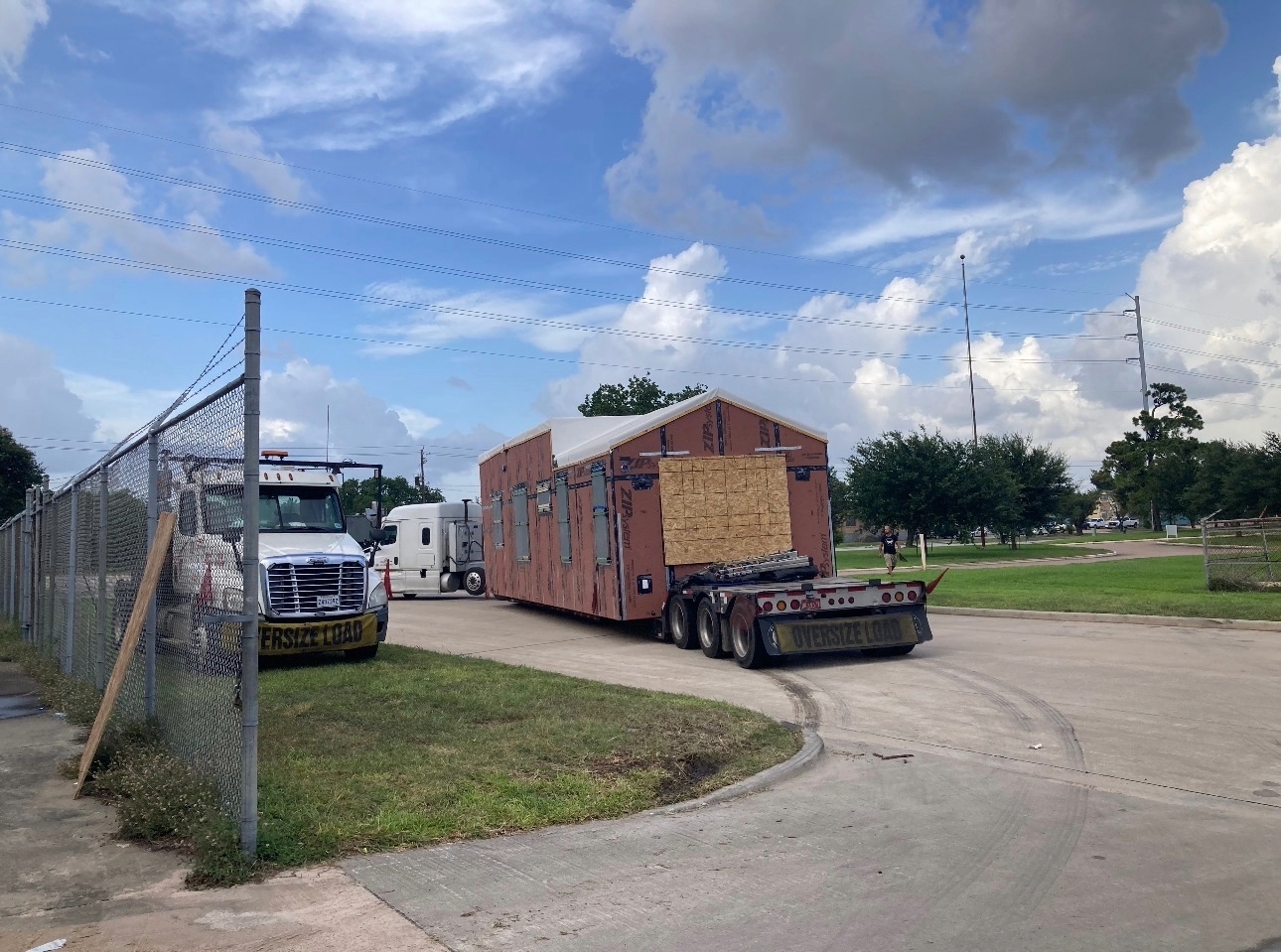
One construction method we’ve successfully used, here at Letter Four, is modular construction, where the majority of your home is built off site in a controlled factory environment and delivered to the lot largely complete. Letter Four utilizes modular as a method of construction for fire rebuilds in Los Angeles. We recently installed the modules for a client who lost their home inAltadena, CA. Let’s talk through the process, timeline, and why modular or factory-built construction methods are a great option if you need to rebuild.
What Does Modular Construction Actually Mean for a Fire Rebuild
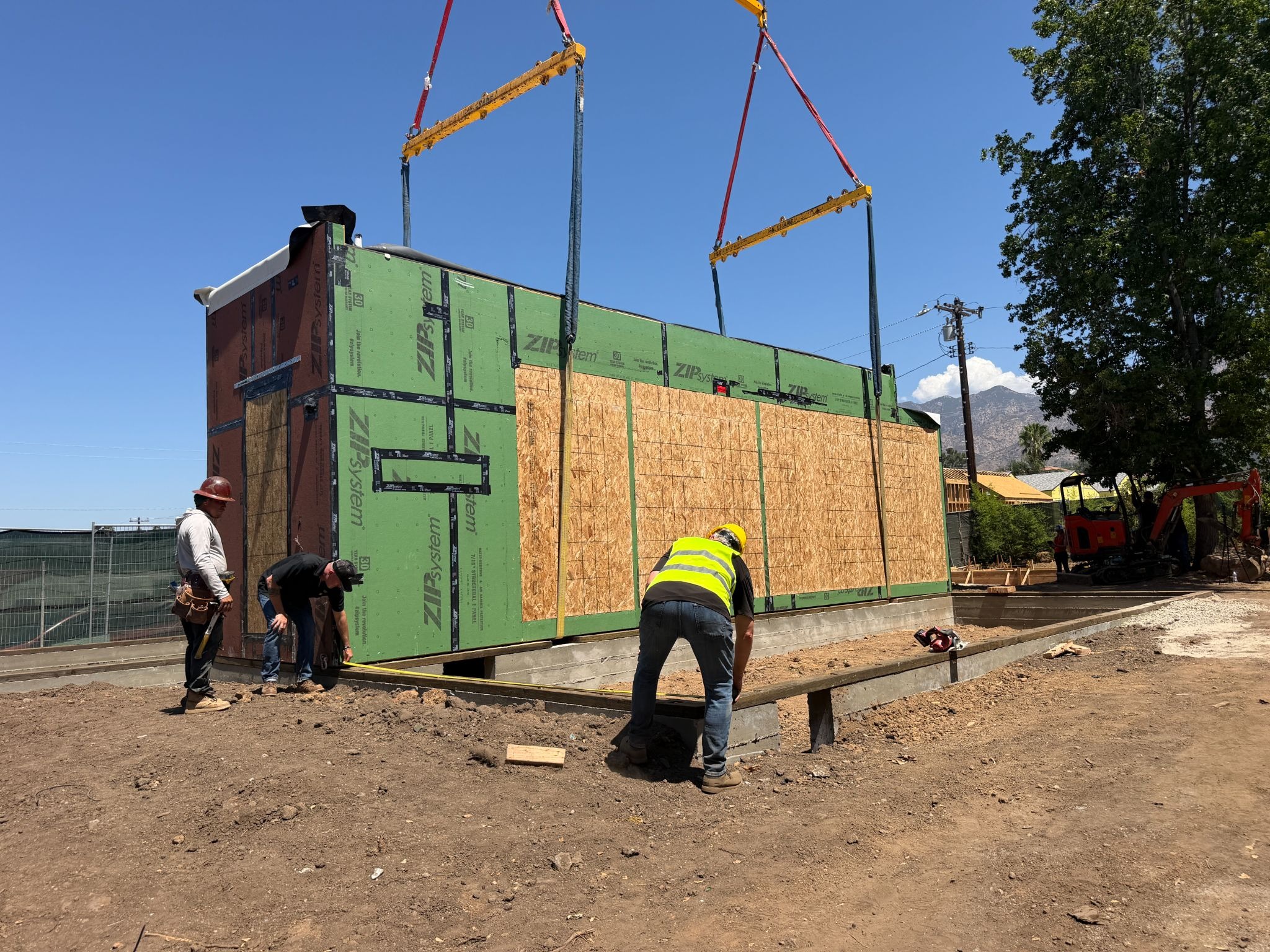
Modular construction means the home is built in sections, panels, or modules, inside a factory, then transported to the lot and set on the foundation with a crane. While the in-factory work is happening we’re preparing the site and installing the foundations. The materials and methods follow the same building codes as a site-built home, including California's wildfire-resistant standards. What changes is where the work happens as framing, electrical, plumbing, mechanical, windows and doors, and interior finishes are completed on a fixed factory schedule. Typically this even includes a full kitchen installation, appliances and all. That means we avoid weather delays and close the sequencing gaps that come from coordinating multiple trades people on an active job site. Once the modules arrive at your empty lot, crews bolt it to the foundation, join the modules, connect utilities, and install exterior finishes.
Why Did This Altadena Family Choose a Modular Rebuild?
This client signed with Letter Four in 2025, in the months following the Eaton Fire, wanting two things above all: A faster and more affordable path back home, and the ability to fully customize the layout and design details. Letter Four proposed building with modular methods as a perfect way to achieve these goals. A fully custom stick-built rebuild can deliver strong design flexibility, but it moves at a slower pace due to permitting queues, contractor availability and weather, all of which are stretched thin across Altadena right now. A modular build facilitated by Letter Four offered a way to keep design control while moving the bulk of construction off that queue and into a factory schedule.
What Did the Rebuild Timeline Actually Look Like?
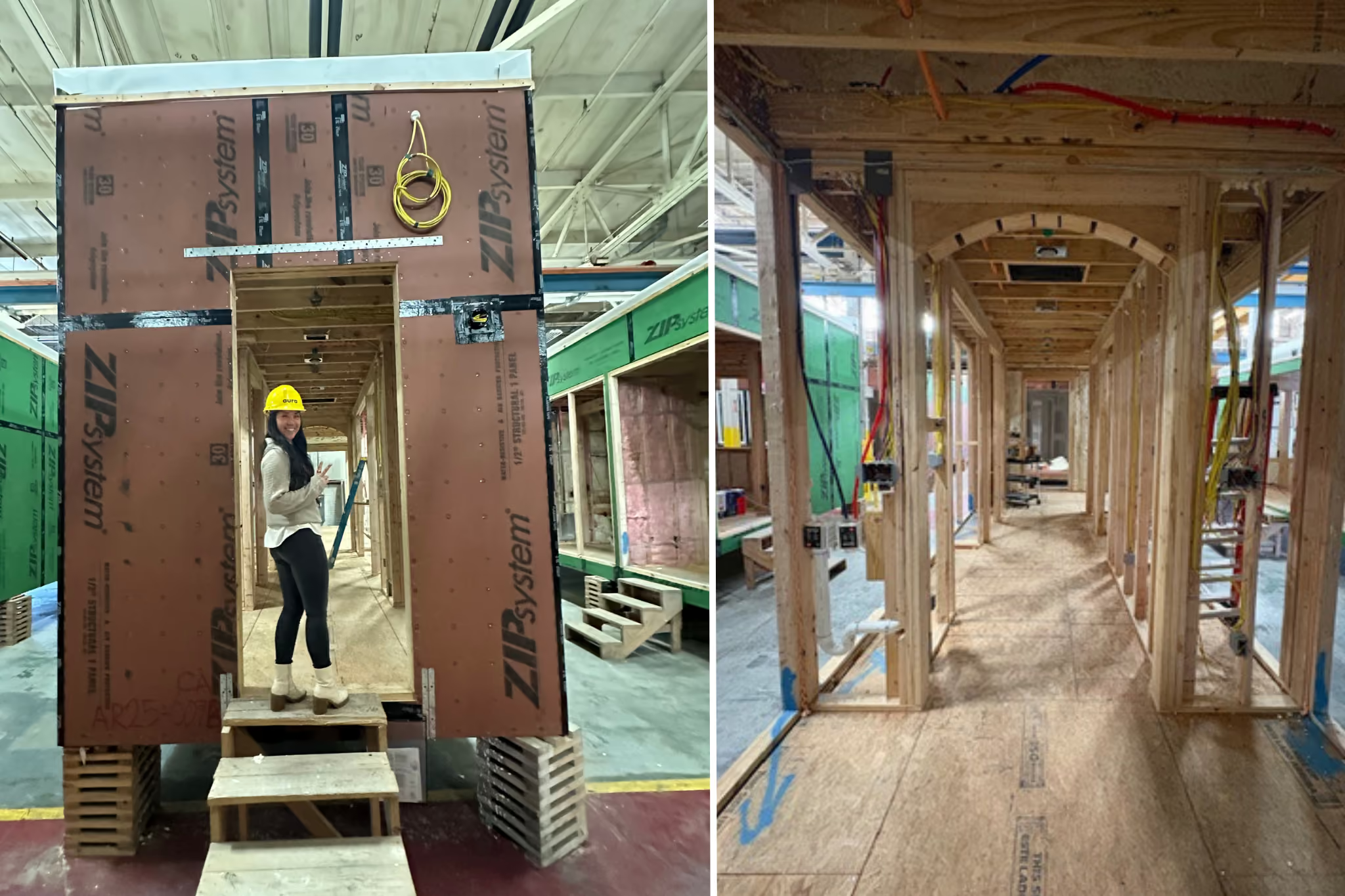
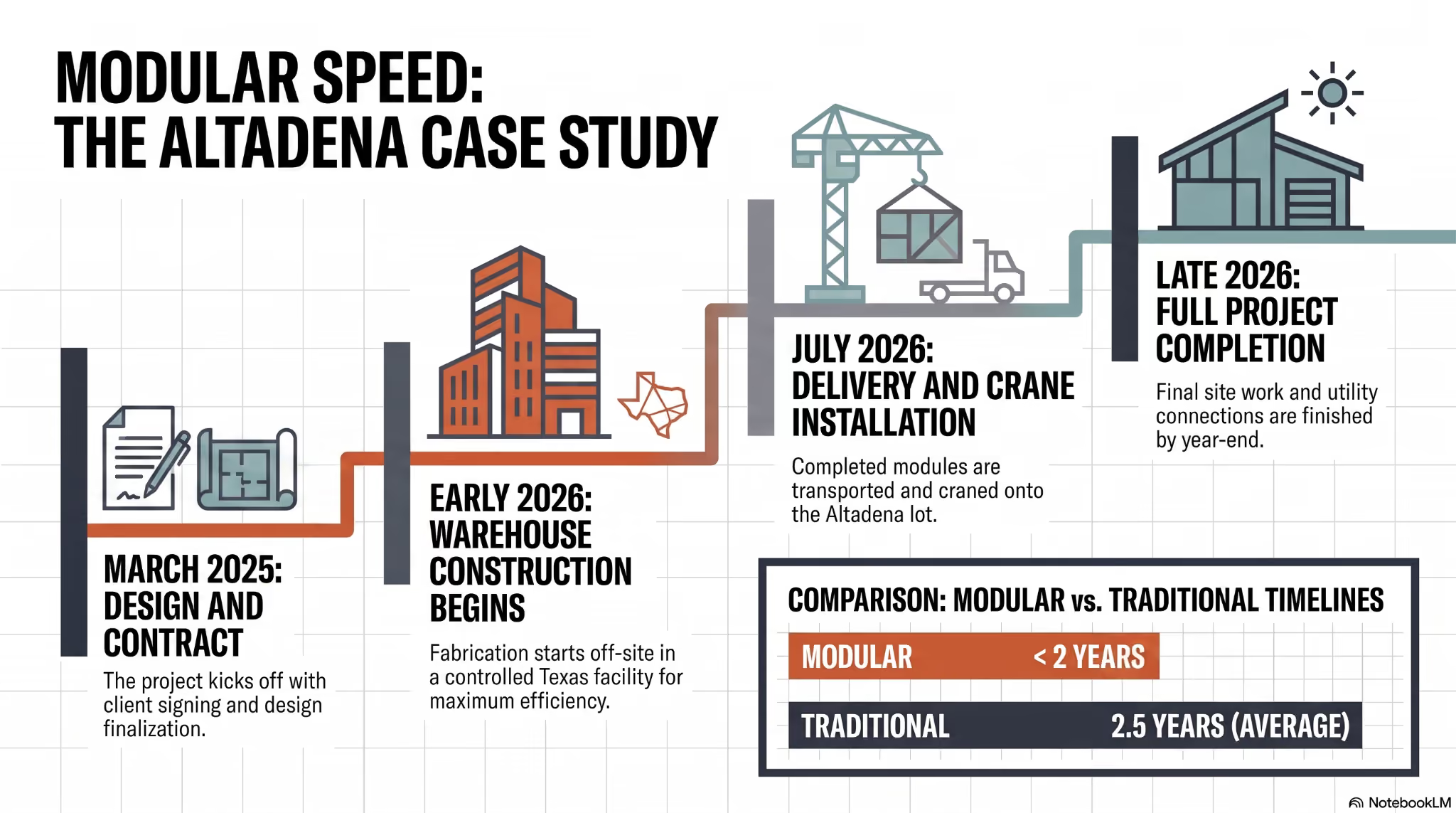
The client signed their contract in March 2025 and the design process followed. Construction on the modular home began in early 2026 at a Texas warehouse facility. Modular construction was the right fit for this client due to speed. That said, the compressed timeline placed real demands on the design phase, requiring fast, decisive choices earlier in the process than with a stick-built home. The priority throughout was simple: Get this family back to their neighborhood, to a home that looks and feels like the one they lost, and achieve this quickly and affordably.
The completed home was delivered and craned onto the Altadena lot in July 2026. From there, the project moves into site work, utility connections and interior finish detailing, with full completion targeted by the end of 2026. Set against the two-to-two-and-a-half-year average for a traditional Altadena rebuild, this project compresses much of the construction timeline. Though site prep and finish work still take real time on any project, modular or not.
Can a Modular Home Still Look Like a Traditional Spanish-Style House?
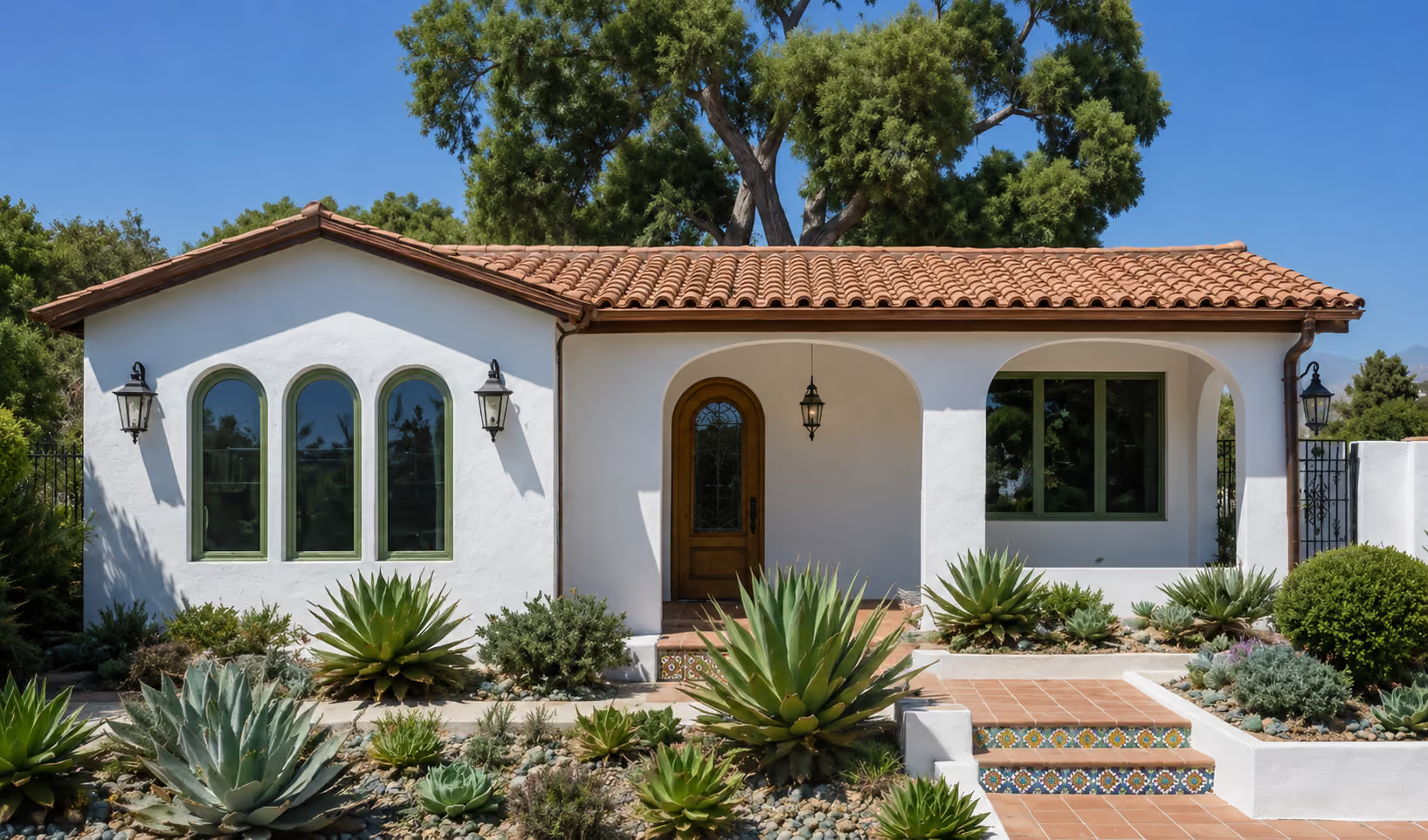
Modular construction is a building method that is not typically associated with the Spanish architectural style. This home's exterior includes stucco walls, tile roofline and arched detailing associated with a traditional Spanish-style house in this neighborhood. This meant more in-field work to create the important details and install Spanish style finishes on the exterior. As you can imagine, we cannot ship the modules with stucco installed, it would crack and we could not conceal the module connections. The design work, from floor plan to finish selections, is led by Letter Four's architects and interior designers. What the home looks like, inside and out, is still a design decision, not a limitation of the method.
What Comes Next, Before Move-In?
With the home delivered on site, the remaining work is largely the same as any rebuild at this stage: connecting utilities, completing interior finishes, landscaping and passing final inspections with LA County before a certificate of occupancy is issued. Letter Four's team is managing that work through the end of 2026, aiming for full completion and move-in readiness on that timeline.
If you are weighing a modular rebuild or you just want to understand what is realistic for your timeline, we are glad to talk it through. Book a consultation with our team to learn more.

Frequently Asked Questions
What is modular construction, and how is it different from a traditional rebuild?
Modular construction means the home is built in sections, typically as modules or panels, inside a factory, then transported to the lot and set in place with a crane. The materials and construction methods follow the same building codes as a site-built home, including California's wildfire-resistant standards. What changes is where the work happens. Framing, wiring, plumbing and finishes are completed in a controlled environment, on a fixed schedule, without weather delays or the sequencing gaps that come from coordinating multiple trades on an active job site. Once modules arrive, crews still handle the foundation, utility connections, exterior finishes and final inspections on site. Modular is not a shortcut on quality. It is a different way of managing where and how the work gets done.
How much faster is a modular rebuild compared to a traditional fire rebuild in Altadena?
Timelines vary by project size, permitting complexity and site conditions, so there is no single number that applies to every home. As a reference point, industry estimates put a full traditional rebuild in Altadena at two to two and a half years, start to finish. In this project, the client signed on in 2025, the modular build began in February 2026, and the home was delivered to the lot in July 2026, with full completion targeted by the end of 2026. That compresses much of the construction timeline into months rather than years, though permitting, site prep and finish work still take real time on any project.
Does a modular home have to look like a modular home?
No. Modular construction is a building method, not an architectural style. The finished exterior can include stucco, tile roofing, arched openings and the other details associated with a traditional Spanish-style home, along with custom interior finishes chosen by the homeowner. Certain elements like a front porch and finishes just require site installation. What it looks like on the outside is still up to the architect and the client. Once complete, most people cannot tell a well-built modular home apart from one built entirely on site.
Is modular construction allowed under LA County's fire rebuild permitting rules?
Modular homes go through the same LA County permitting process as any other rebuild, including plan review, structural approval and final inspection before occupancy. There is no separate or reduced approval path for modular construction. Every project still needs a licensed architect and contractor to manage code compliance, from foundation engineering and installation to California's updated wildfire building requirements. If you are considering a modular rebuild your first step is to verify that the truck and crane are able to access your lot.
Does modular construction meet California's wildfire building code requirements?
Yes. Modular homes built for California must meet the same state building code requirements as any other new construction, including the Wildland-Urban Interface standards under Title 24 that took effect at the start of 2026 for fire-affected areas. That means fire-resistant materials, hardened vents and defensible construction details are built into the home at the factory rather than added on site. The code does not distinguish between how a home is built, only what it is built to withstand.
_____________________________________________________________________
Letter Four partners with modular fabricators who need a licensed general contractor for installation. As a Los Angeles-based design-build firm, we bring both architectural oversight and field-level construction expertise to modular projects from foundation through final walkthrough. If you're a fabricator looking for an installation partner, we'd welcome the conversation.
hello@letterfour.com | (323) 275-1140
Sources: Alto Builders, "Rebuilding After the Eaton Fire in Altadena: A Complete Homeowner's Guide for 2026" (altobuilds.com); LAist, "Rebuilding in Altadena," on the Title 24 Wildland-Urban Interface Code (laist.com).
.png)
.avif)

.svg)

















.avif)